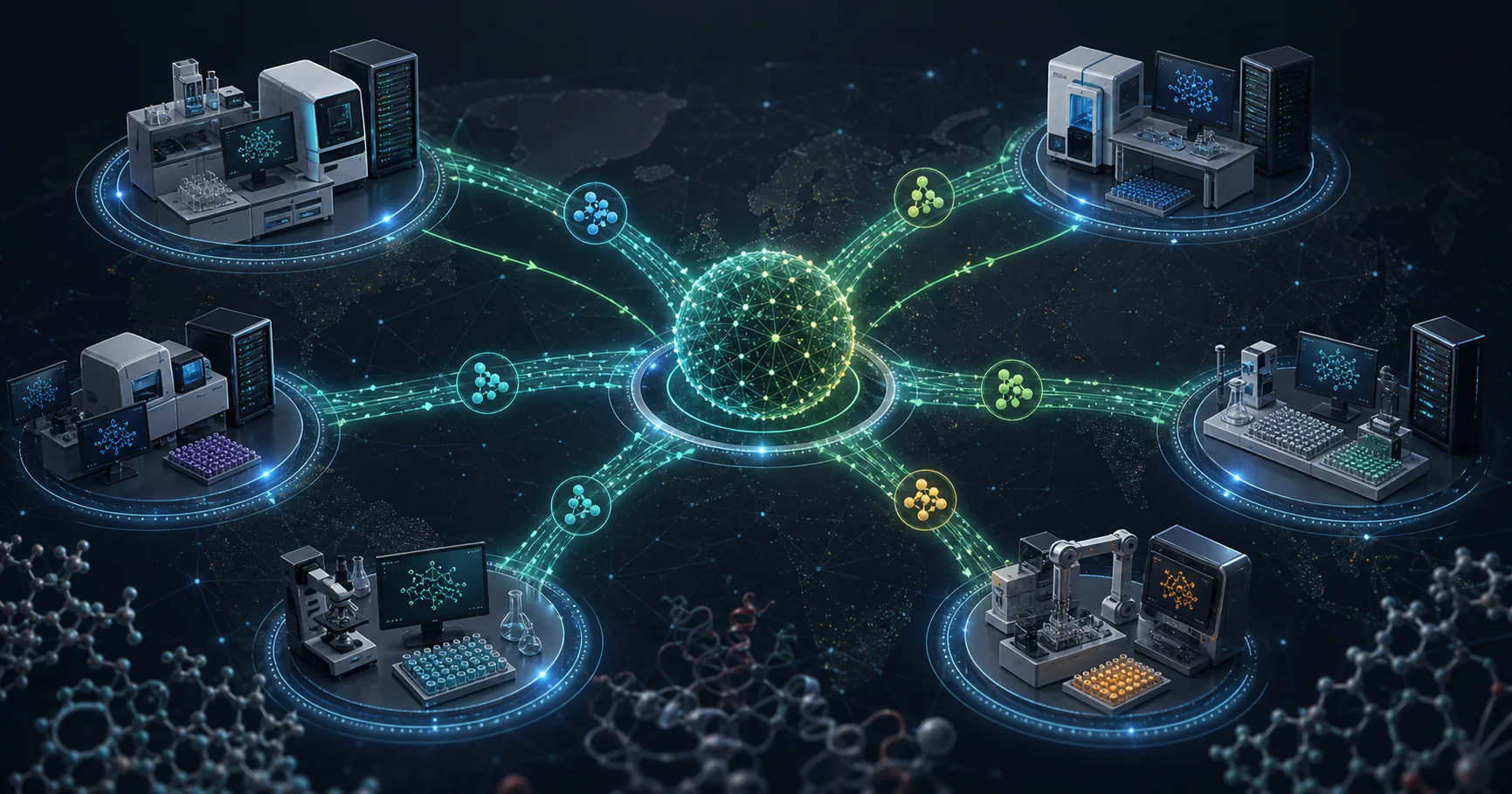
Eli Lilly’s launch of TuneLab represents a strategic pivot in biotech AI infrastructure, offering early-stage companies access to proprietary drug discovery models trained on years of internal research data. By leveraging federated learning hosted by a third party, the platform enables collaborative ecosystem improvement without direct data exchange, addressing the critical tension between model performance and intellectual property protection in competitive drug development landscapes.
Federated Architecture for Privacy
TuneLab employs federated learning to allow biotech partners to utilize Lilly’s AI models without exposing proprietary datasets. This architecture ensures that neither Lilly nor its partners reveal prized data, as the system facilitates model updates rather than raw data transfer. The platform is hosted by a third party to further isolate sensitive information while enabling the continuous improvement of shared capabilities across the ecosystem.
This approach aligns with broader scientific efforts to balance privacy preservation with collaborative model training. By synchronizing locally-trained models instead of original data, TuneLab mitigates the risks associated with centralized data aggregation, allowing smaller entities to access advanced AI capabilities typically reserved for large pharmaceutical firms without compromising their own confidential research assets.
Ecosystem Equalization Strategy
The platform is designed as an 'equalizer' to democratize access to high-performance AI tools. Lilly Chief Scientific Officer Daniel Skovronsky, M.D., Ph.D., emphasized that TuneLab allows smaller companies to leverage the same AI capabilities used daily by Lilly scientists. This initiative aims to accelerate drug development timelines for early-stage biotechs by providing them with sophisticated models trained on extensive historical research data.
In return for access, participating biotechs are expected to contribute training data to fuel continuous improvement. This reciprocal mechanism fosters a collaborative environment where ecosystem-wide advancements benefit all participants and ultimately patients. The model shifts the paradigm from isolated AI development to a shared infrastructure where collective intelligence drives innovation in drug discovery.
What to Watch
Monitor the adoption rates among early-stage biotechs to assess whether federated learning can effectively scale across diverse proprietary datasets without significant performance degradation. Key signals include the quality of contributed training data and the resulting improvements in model accuracy for specific therapeutic areas.
Track regulatory and competitive responses to third-party hosted federated platforms. The success of TuneLab may influence industry standards for data sharing, potentially prompting other large pharma companies to develop similar infrastructure or leading to new frameworks for validating AI-driven drug discovery outcomes in collaborative settings.
Sources
- Source article
- Federated and Transfer Learning: A Survey on Adversaries and D… — 2022-07-05
- RAG-Enhanced Collaborative LLM Agents for Drug Discovery — 2025-02-22
- Federated AI lets a team imagine together: Federated Learning … — 2019-06-09
- VAFL: a Method of Vertical Asynchronous Federated Learning — 2020-07-12
- Central Server Free Federated Learning over Single-sided Trust… — 2019-10-11
- Domain Knowledge Infused Conditional Generative Models for Acc… — 2025-10-10
- Towards Interpretable Federated Learning — 2023-02-27
- Decentralized Federated Learning: A Segmented Gossip Approach — 2019-08-21