TRACKING / ANALYSIS
Analysis of the neoantigen-vaccine field
Deeper, hand-written takes — what the daily brief adds up to over time, read against the data.
Tracking44 articlesUpdated when warranted
Tempus AI's expanded multi-year deal with Moderna and Merck positions the sequencing company as core commercial infrastructure for intismeran autogene (V940), an individualized neoantigen vaccine deli · 2026-10-14
NEC, Taiho Pharmaceutical, JFCR, AIST, and Waseda University have launched a NEDO-backed project to build a quantum computing platform for optimal neoantigen candidate design and immunological validat · 2026-10-02
As Moderna and Merck's intismeran autogene reports positive Phase 3 data with Keytruda, the first regulatory approval of a personalized neoantigen cancer vaccine is within sight · 2026-10-01
The first positive Phase 3 for an individualized neoantigen therapy validated mutation-derived targeting — and a third entrant is arguing the opposite case · 2026-08-27
This article analyzes the clinical success of the Moderna-Merck personalized cancer vaccine for melanoma · 2026-08-21
A novel personalized cancer vaccine developed by Moderna and Merck demonstrates significant promise when combined with the immunotherapy Keytruda · 2026-08-21
A large clinical trial demonstrates that personalized mRNA vaccines can effectively prevent melanoma recurrence · 2026-08-20
Scientists are developing individualized neoantigen therapies to train the immune system against specific tumor mutations · 2026-08-13
Paul Conyngham transforms a viral experiment into Gamgee, a biotech venture creating personalized mRNA vaccines using generative AI · 2026-08-12
Scientists are shifting from one-size-fits-all treatments to personalized cancer care by analyzing tumor genetics · 2026-08-12
The viral vector-based neoantigen vaccine targets shared frameshift peptides in mismatch repair-deficient tumors · 2026-08-11
Scientists are developing individualized neoantigen therapies that leverage mRNA to train the immune system against a patient's unique tumor mutations · 2026-08-02
Scientists are developing individualized neoantigen therapies that leverage a patient's unique tumor fingerprint · 2026-08-01
Transgene reports 100% disease-free survival in its Phase I trial of the individualized neoantigen vaccine TG4050 for head and neck cancer · 2026-07-28
Merck and Moderna leverage machine learning to design personalized vaccines targeting unique tumor mutations · 2026-07-07
Researchers develop a novel fungal genome-editing mechanism that could revolutionize precision medicine · 2026-07-04
A comprehensive UBC-led analysis affirms the safety and effectiveness of mRNA vaccines across billions of administrations · 2026-07-02
Likang Life Sciences constructs China's first AI-driven facility for personalized tumor vaccines · 2026-07-01
China establishes its first production line for AI-assisted personalized tumor vaccines, targeting tumor-specific mutations with rapid analysis · 2026-06-29
NVIDIA introduces the BioNeMo Agent Toolkit to empower AI agents with domain-specific tools for protein design and drug discovery · 2026-06-28
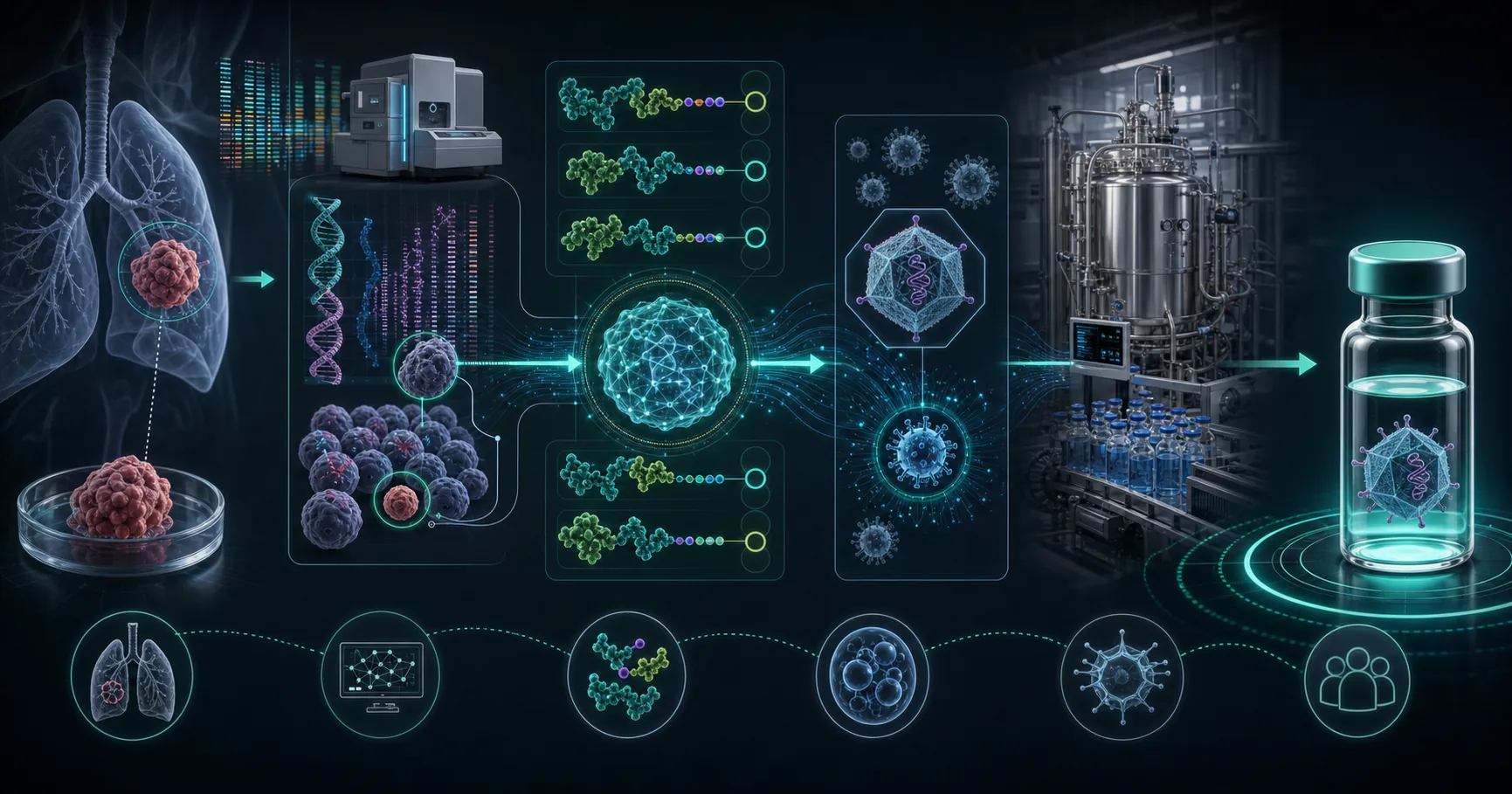
With its second myvac candidate, Transgene moves neoantigen selection fully in-house under SNIPER and swaps egg-based vaccine production for scalable cell lines — testing whether a viral-vector platfo · 2026-06-25
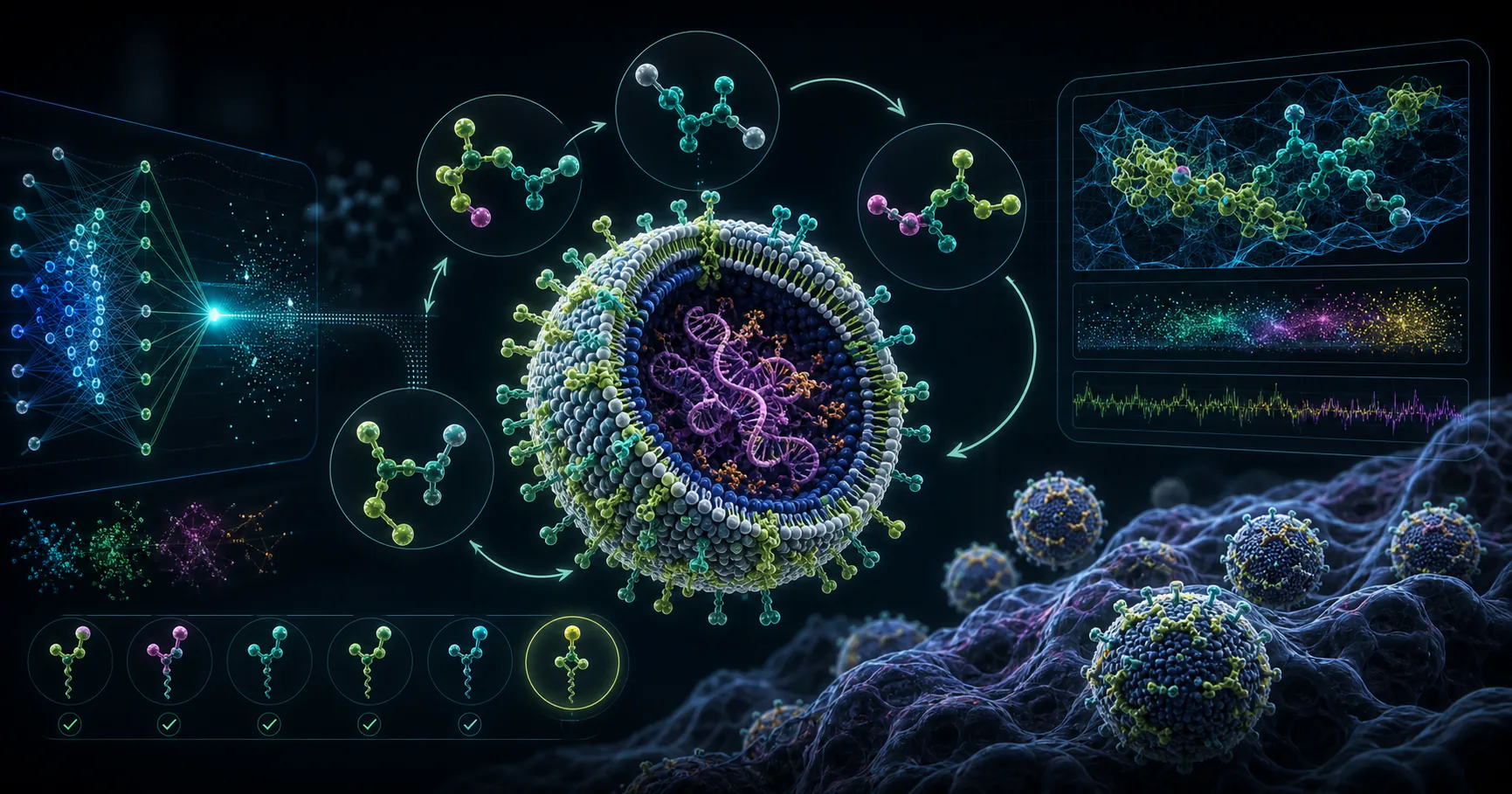
Generative models and molecular dynamics are transforming ionizable lipid discovery from combinatorial screening to computational design · 2026-06-25
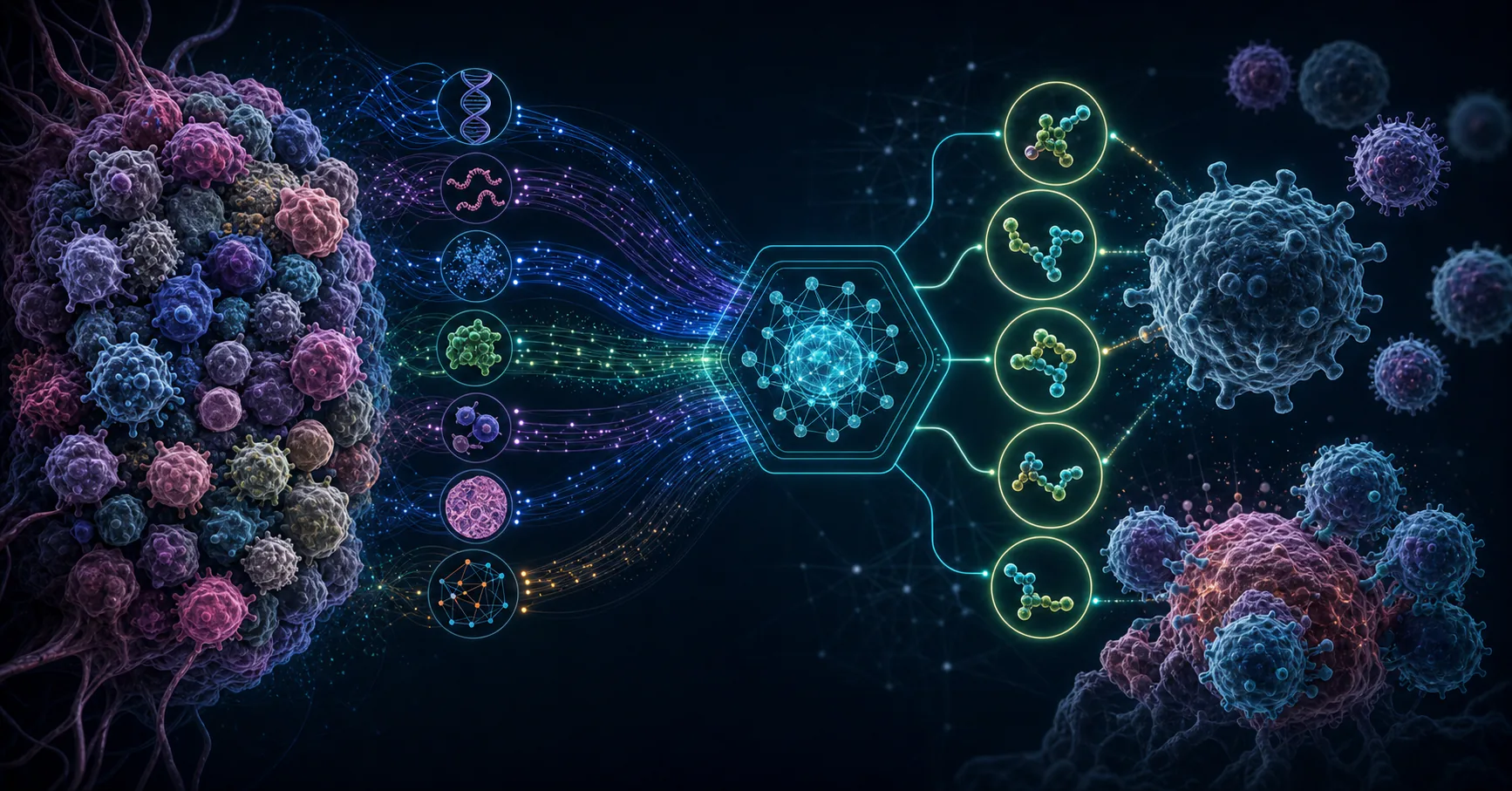
This article examines Invoke Bio's proprietary machine learning engine that integrates biomolecular signals to predict immunogenic targets with high accuracy · 2026-06-24
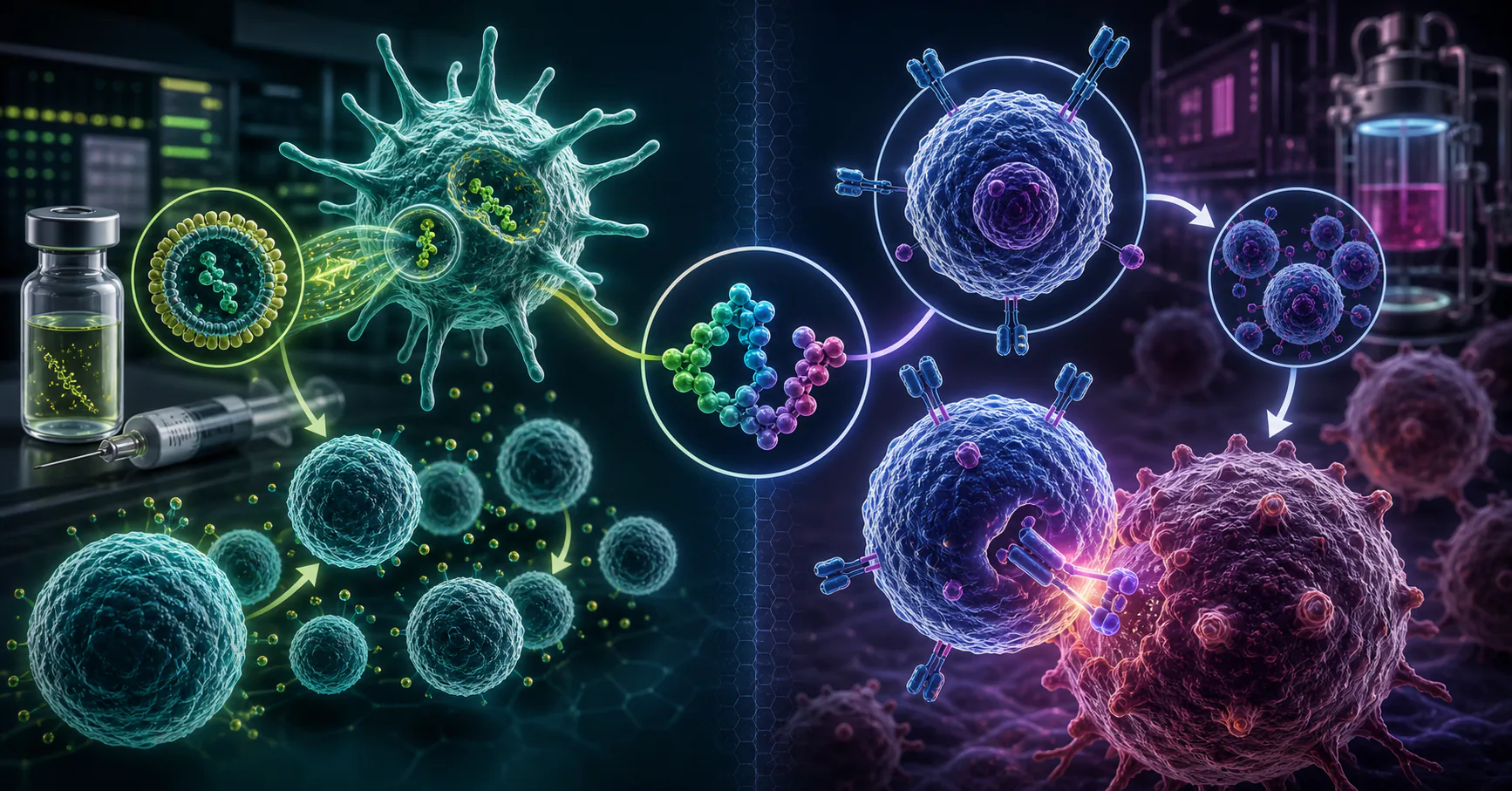
A direct comparison of neoantigen vaccines and neoantigen-reactive TCR-T cell therapy: same upstream target-selection problem, different delivery. Vaccines induce the patient's own T-cell response; TCR-T manufactures and infuses target-specific cells. The trade-offs are HLA restriction, speed, breadth, safety, durability, and trial maturity. · 2026-06-23
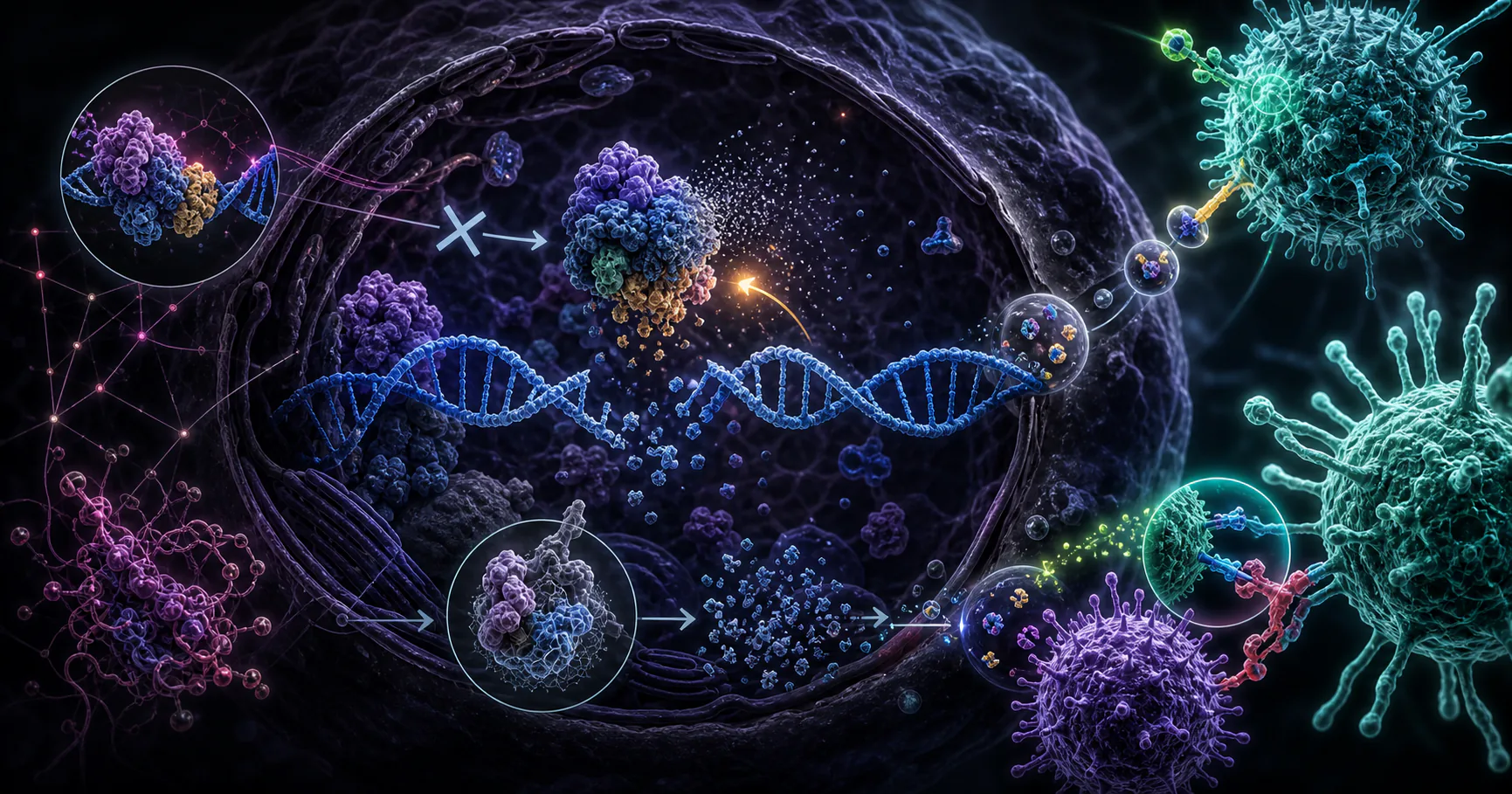
Researchers identify UNI418 molecule that degrades RAD51, reversing PARP inhibitor resistance in preclinical models · 2026-06-17
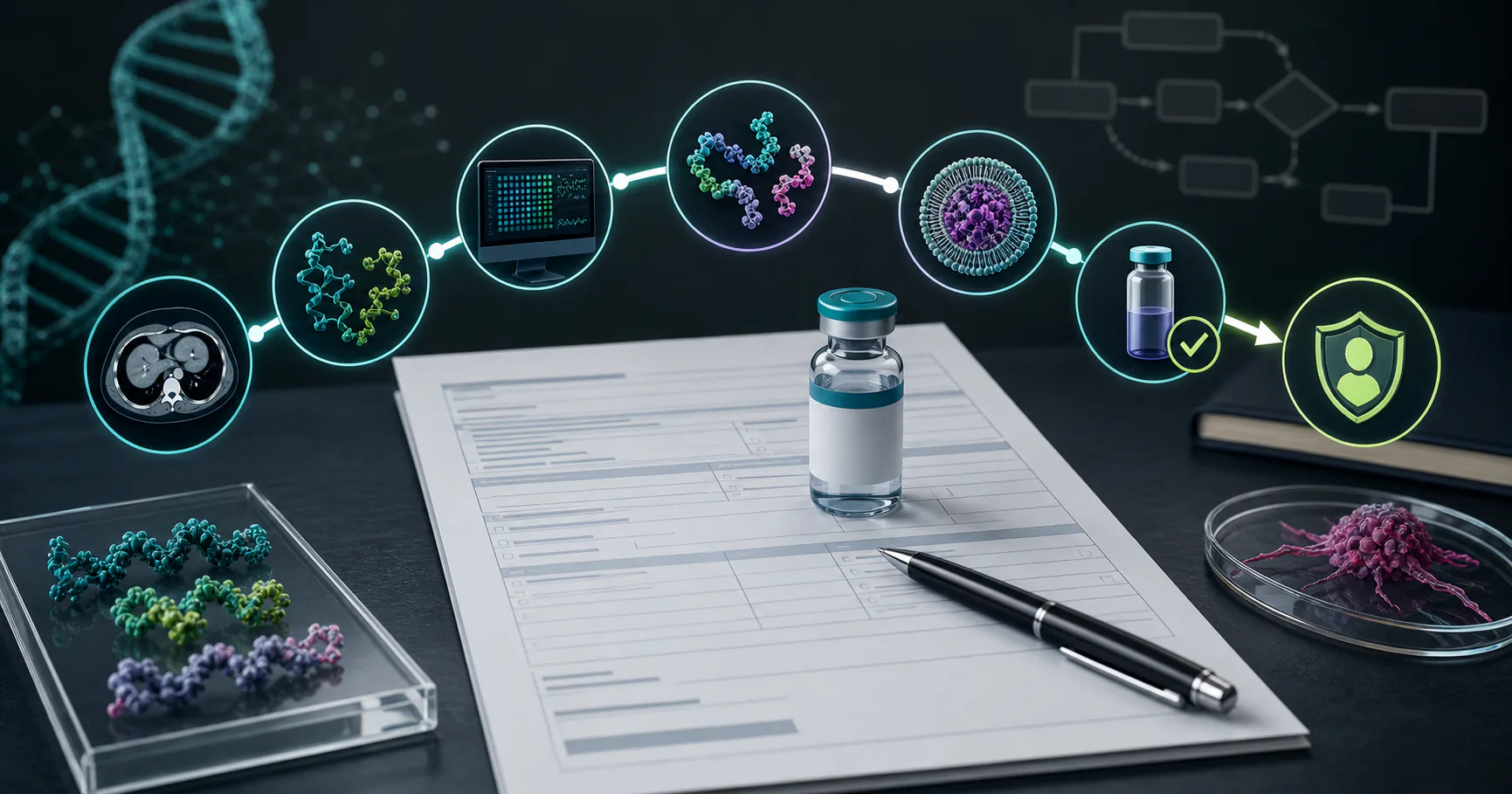
FDA Form 3926 is the form a physician uses to request individual-patient expanded access ("compassionate use") to an investigational drug — and for a patient who is excluded from every trial, it is the only path to an AI-designed personalized cancer vaccine. A field guide to the Single Patient IND workflow: how Form 3926 works, the clinical rationale and letter of authorization it must carry, the 30-day and emergency timelines, IRB clearance, the ~$100k out-of-pocket reality, and where it fits the N-of-1 regulatory picture. · 2026-06-15
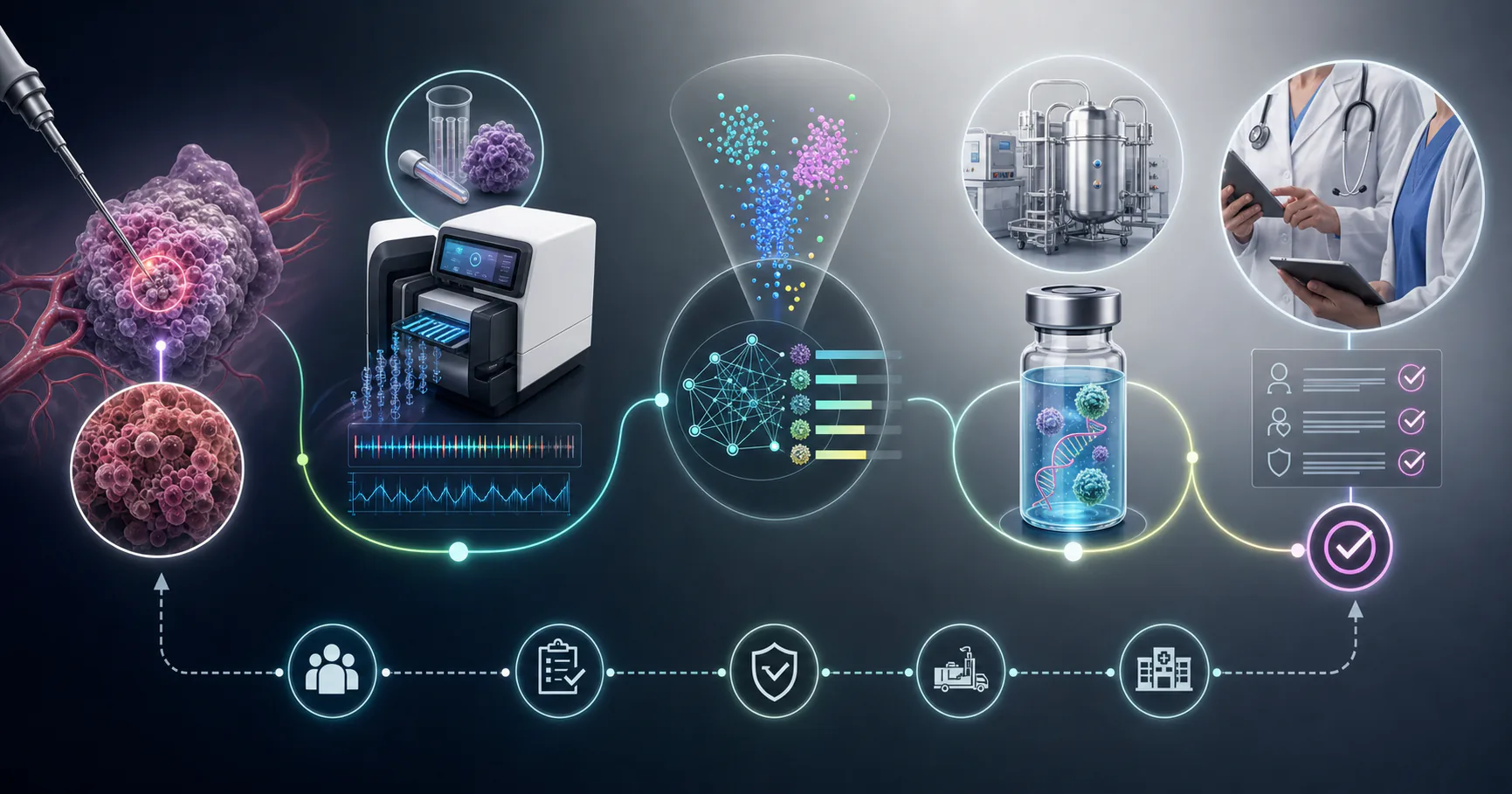
Explore the pipeline from tumor sequencing to mRNA synthesis for personalized immunotherapies · 2026-06-15
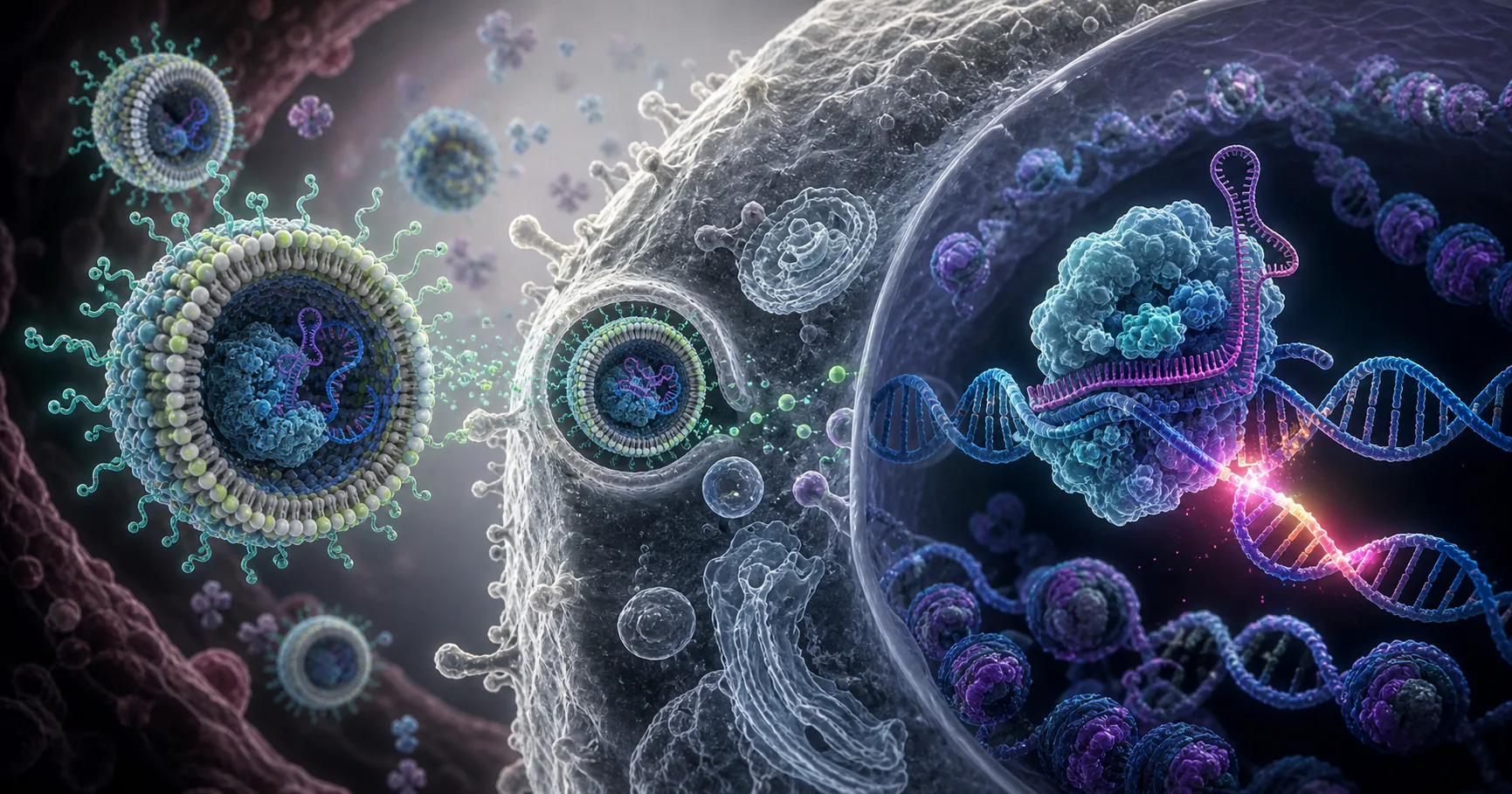
This article explores a systematic optimization platform for prime editing lipid nanoparticles to enhance in vivo delivery efficiency · 2026-06-15
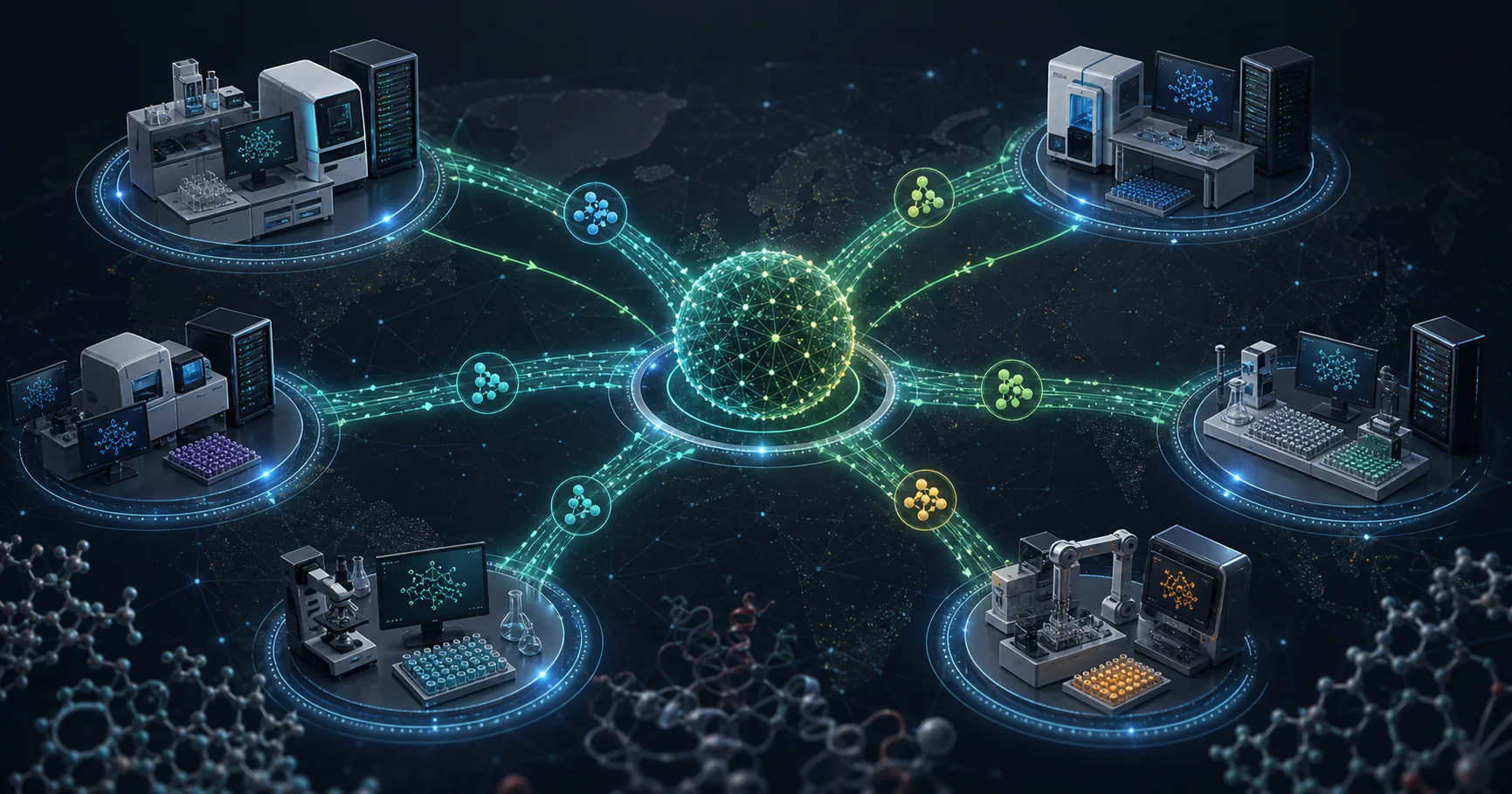
Eli Lilly launches an AI platform enabling early-stage biotechs to access proprietary drug discovery models · 2026-06-12
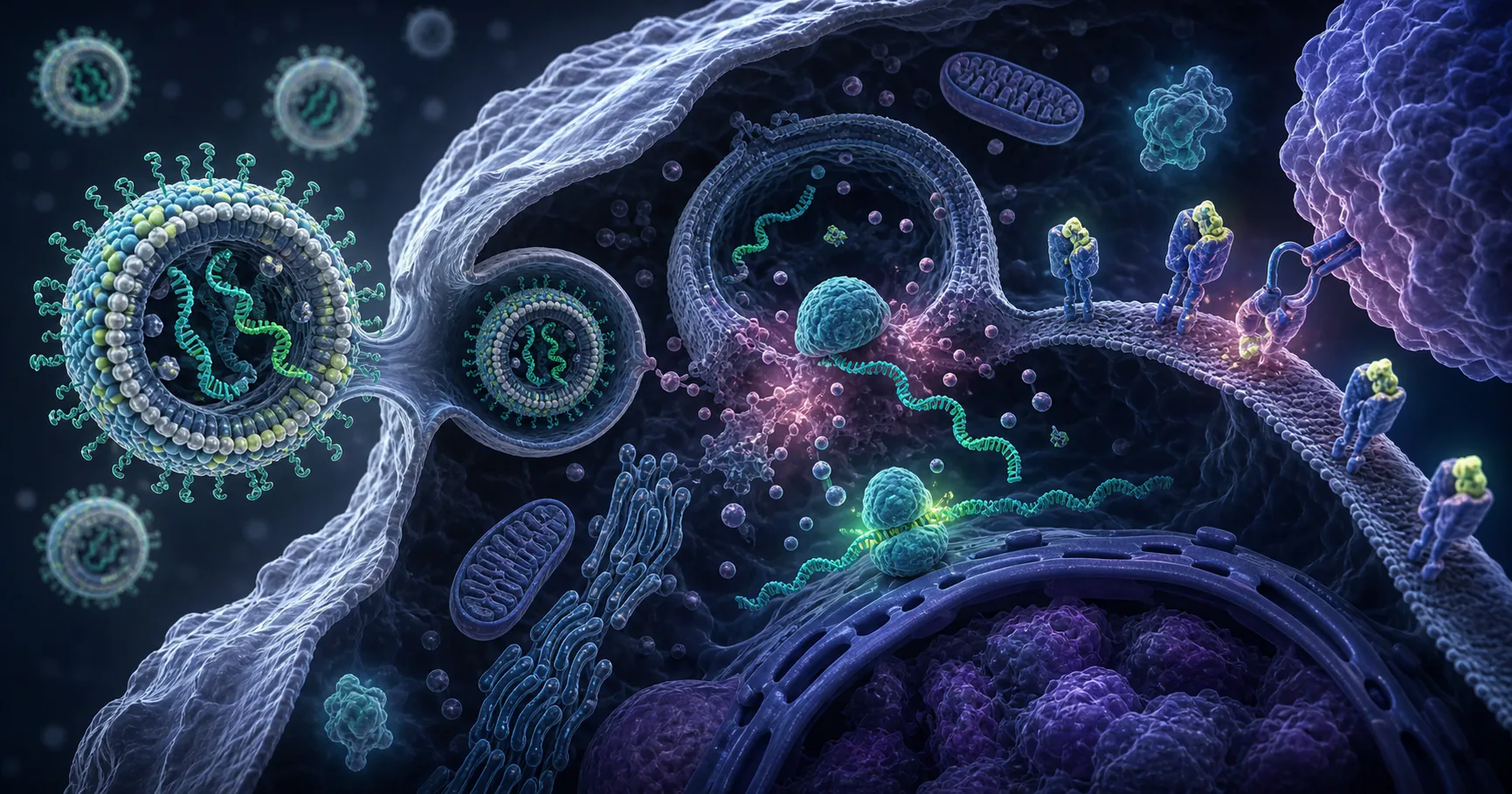
Generative models, transfection predictors, and molecular-dynamics simulations are turning ionizable-lipid discovery from combinatorial guesswork into computation — and reaching the spleen-targeting c · 2026-06-11
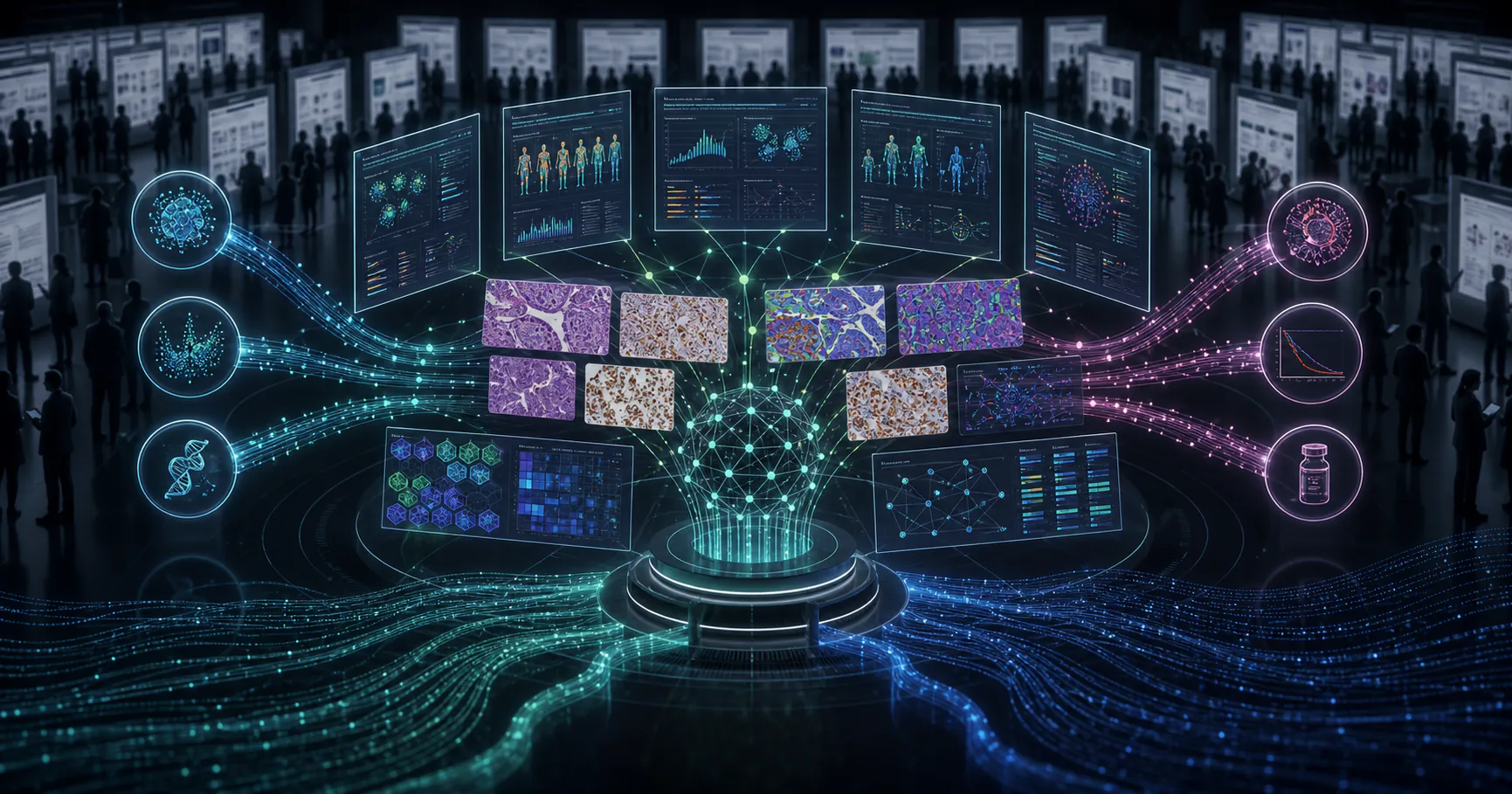
Analyze 7,282 ASCO 2026 abstracts revealing top drugs like pembrolizumab and the rise of pan-RAS inhibitors · 2026-06-10
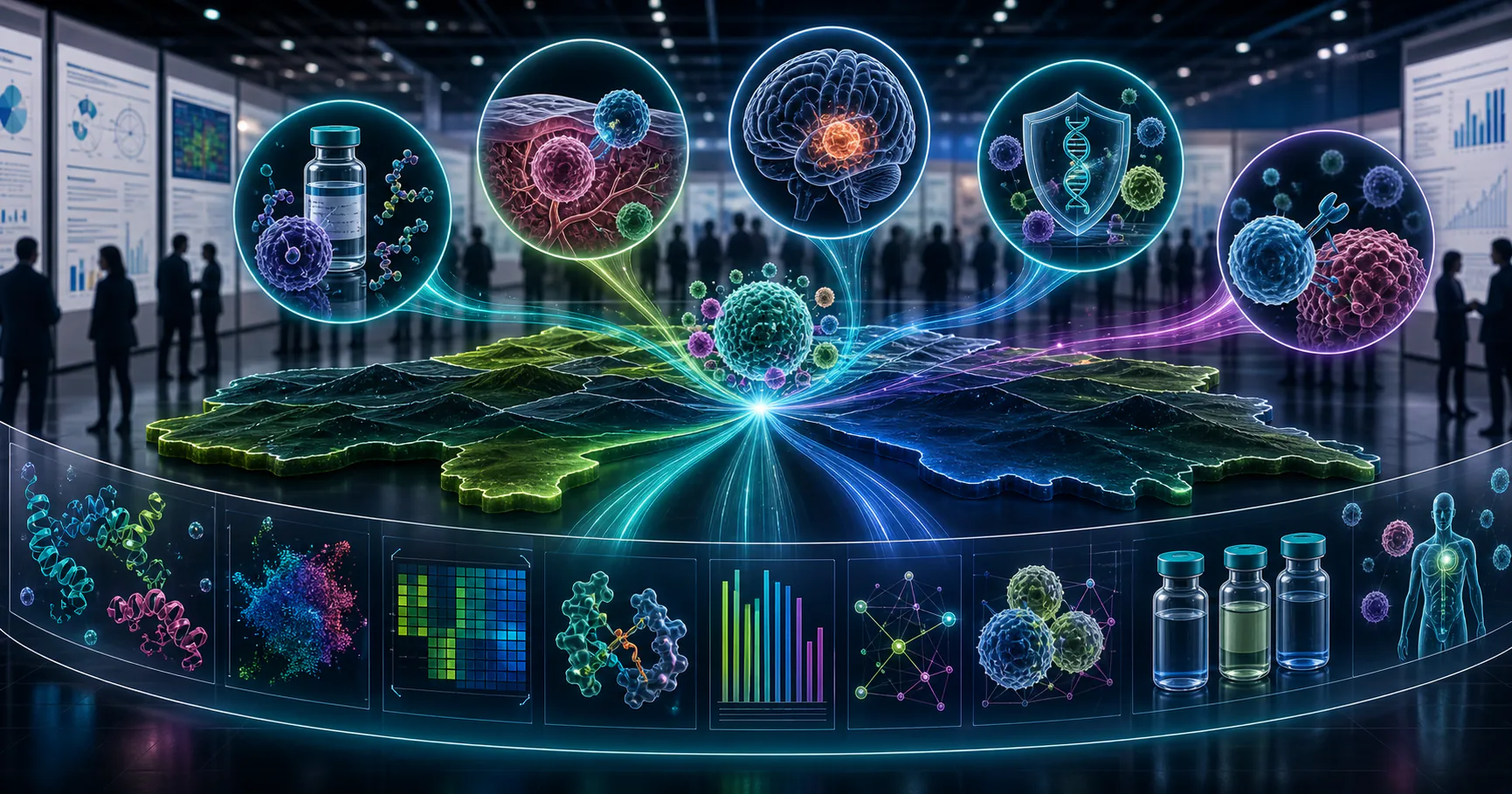
A neoag reader's map of ASCO 2026: the three personalized-vaccine readouts that matter (intismeran's five-year melanoma update, NeoVax in glioblastoma, NOUS-209 in Lynch syndrome), the arrival of neoantigen-reactive TCR-T as a real category, the competing modalities (bispecifics, ADCs, ctDNA-guided therapy, pan-RAS), and the readouts that were notably absent. · 2026-06-04
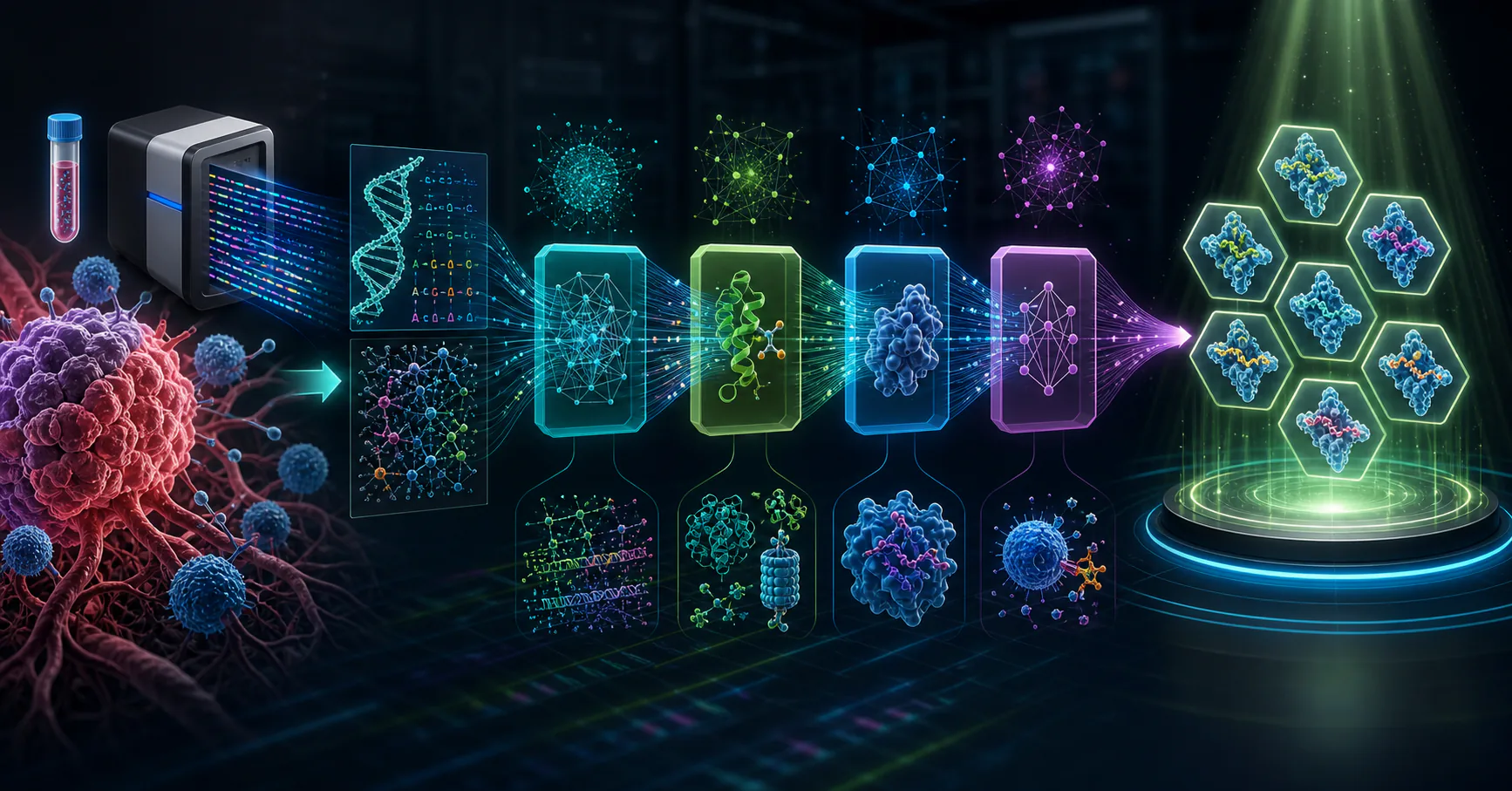
A maintained field guide to the neoantigen-prediction toolchain: the end-to-end open-source pipelines (pVACtools, Seq2Neo, NeoPredPipe, pTuneos, OmniNeo and more), the peptide–HLA presentation predictors beneath them (NetMHCpan, MHCflurry, MixMHCpred), and the immunogenicity frontier where the hard, unsolved problem lives. · 2026-05-30
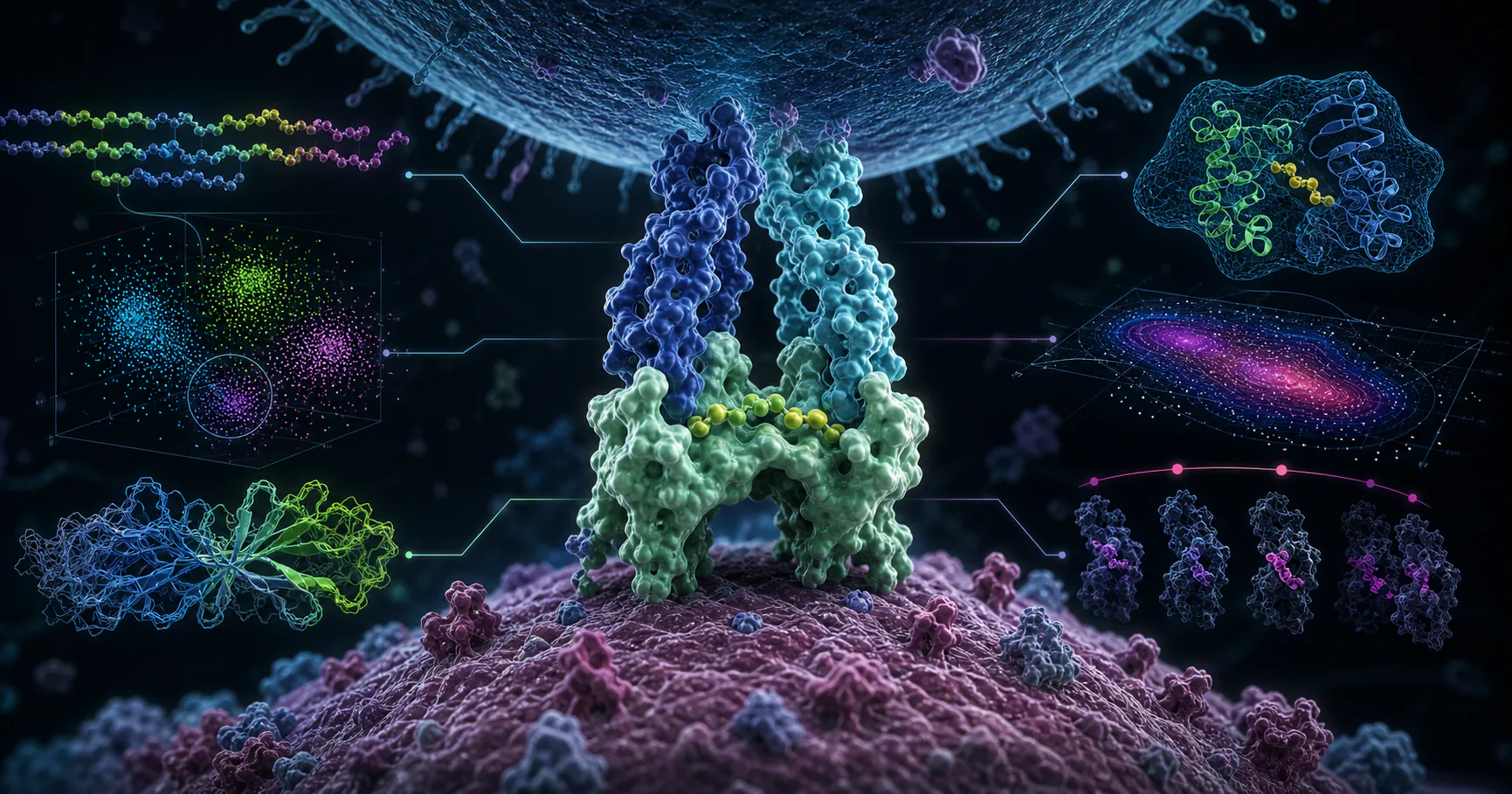
A comparison of TCR–pMHC prediction models by input data, intended regime, availability, and failure mode: NetTCR, ERGO-II, TITAN, STAPLER, MixTCRpred, TABR-BERT, TULIP, tcrLM, pMTnet, epiTCR, TCR-ESM, and structure-based newcomers. · 2026-05-30
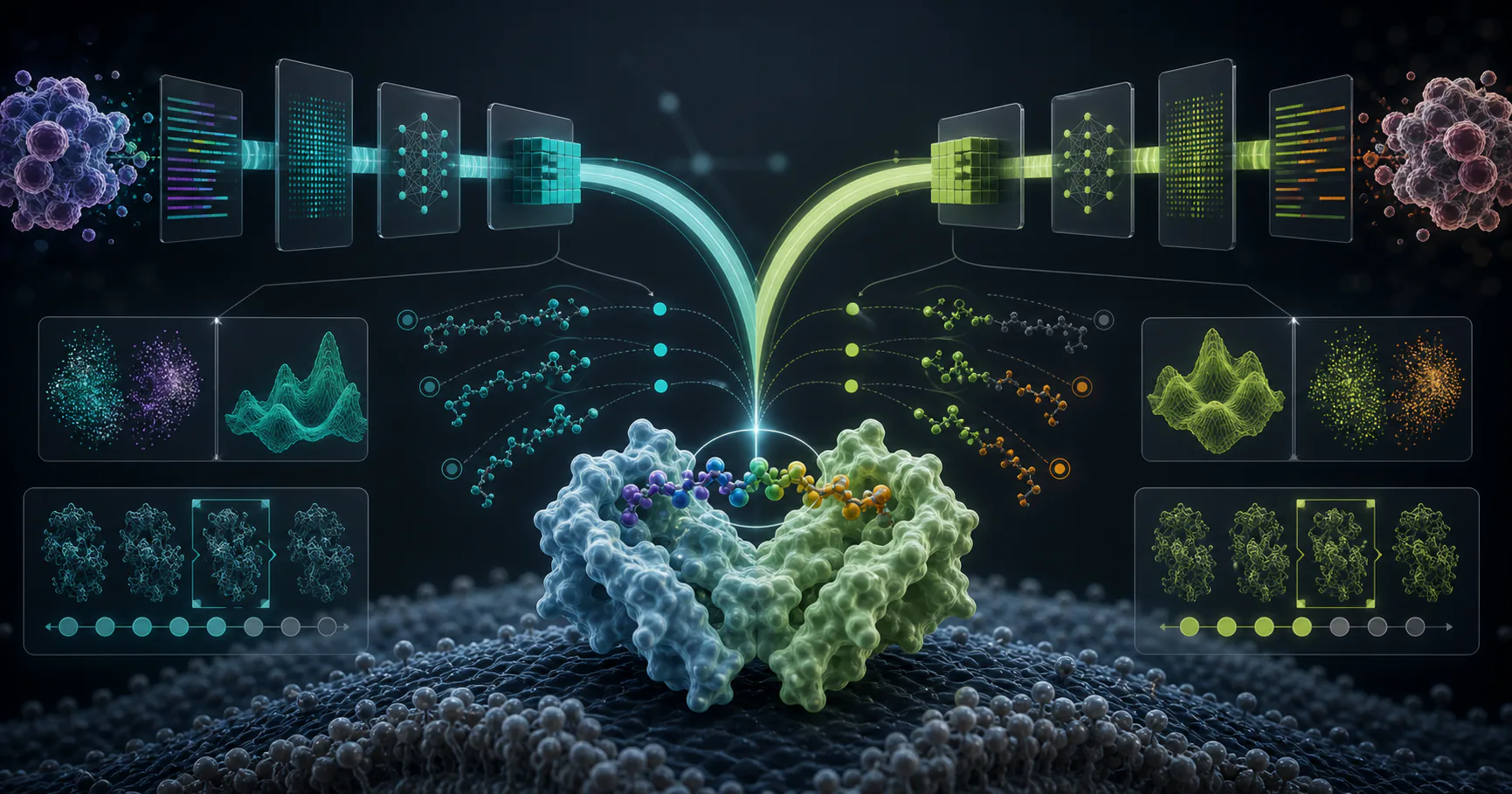
NetMHCpan-4.1 and MHCflurry 2.0 both predict whether a peptide will be presented by an HLA molecule, but they differ in licensing, scriptability, allele coverage, and class II support. Neither is uniformly better. Here is how to choose, and the caveat that matters more than the choice. · 2026-05-30
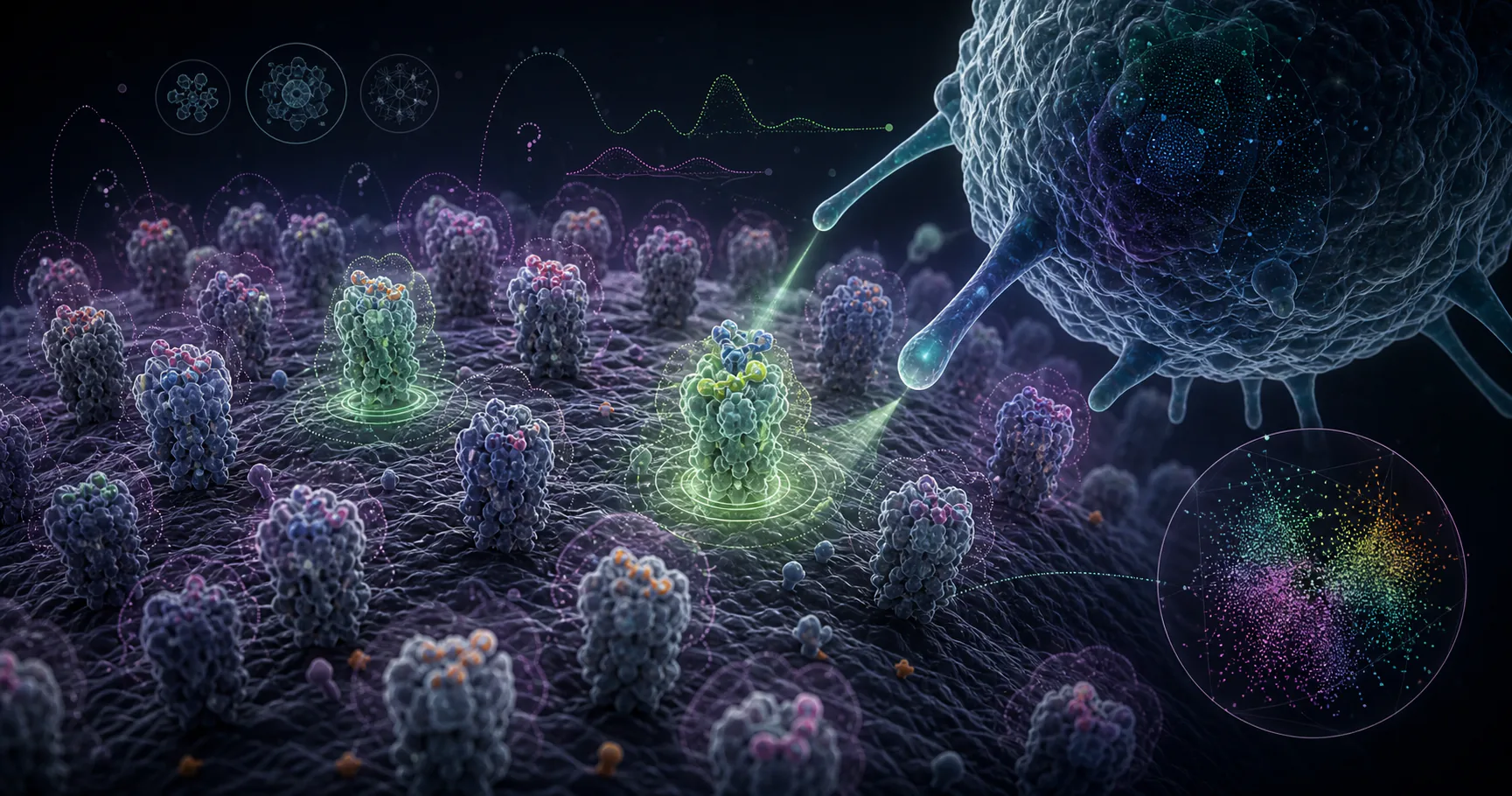
HLA binding is largely a solved problem. Antigen presentation is mostly solved. Immunogenicity — whether a presented peptide actually triggers a T-cell response — is not. We unpack why the prediction pipeline breaks at the last step, and how the field is trying to fix it. · 2026-05-30
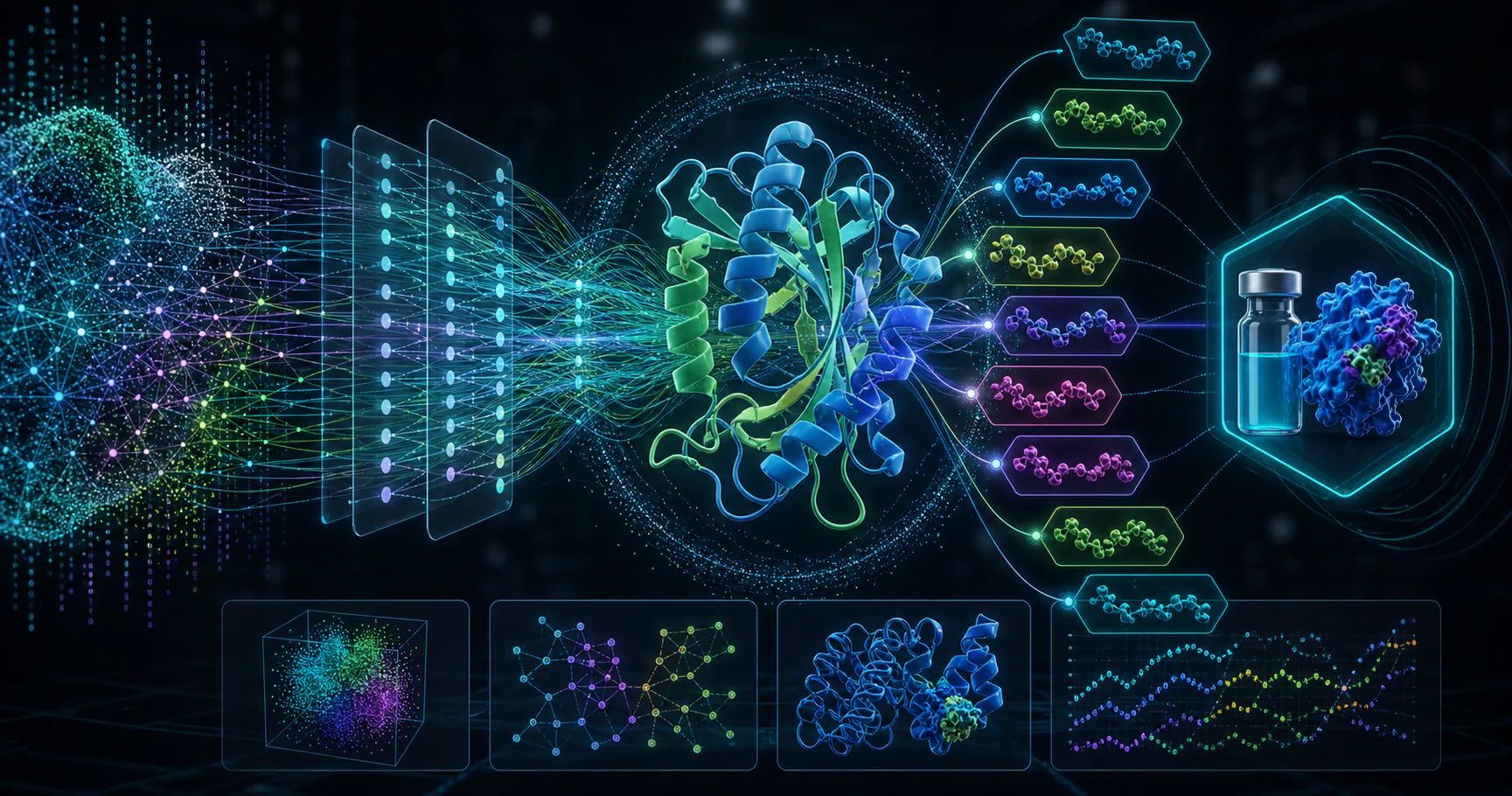
Protein and biology foundation models — the ESM lineage, AlphaFold2/3, and BERT-style sequence models — are being aimed at the hardest parts of neoantigen vaccine design: pMHC binding, TCR recognition, and de novo peptide generation. A sharp look at what is demonstrated, what is promised, and the under-appreciated HLA-equity dividend. · 2026-05-30
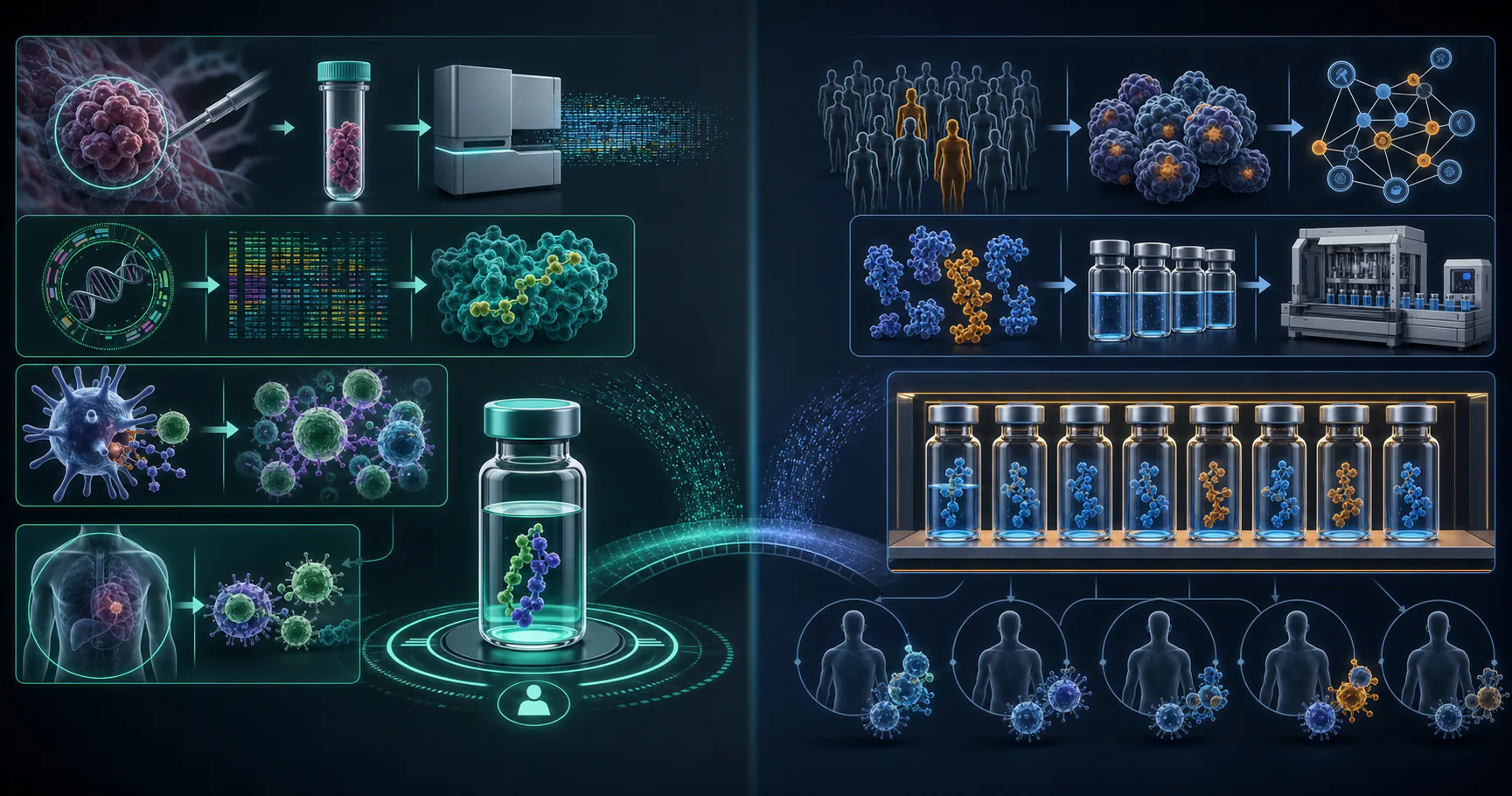
Personalized and off-the-shelf neoantigen vaccines make opposite bets on precision versus scale. We map the tradeoffs in manufacturing, turnaround, cost, applicability and the prevention angle — and where AI fits each — citing the lead programs from Moderna/Merck, BioNTech, Nouscom, Elicio and others. · 2026-05-30
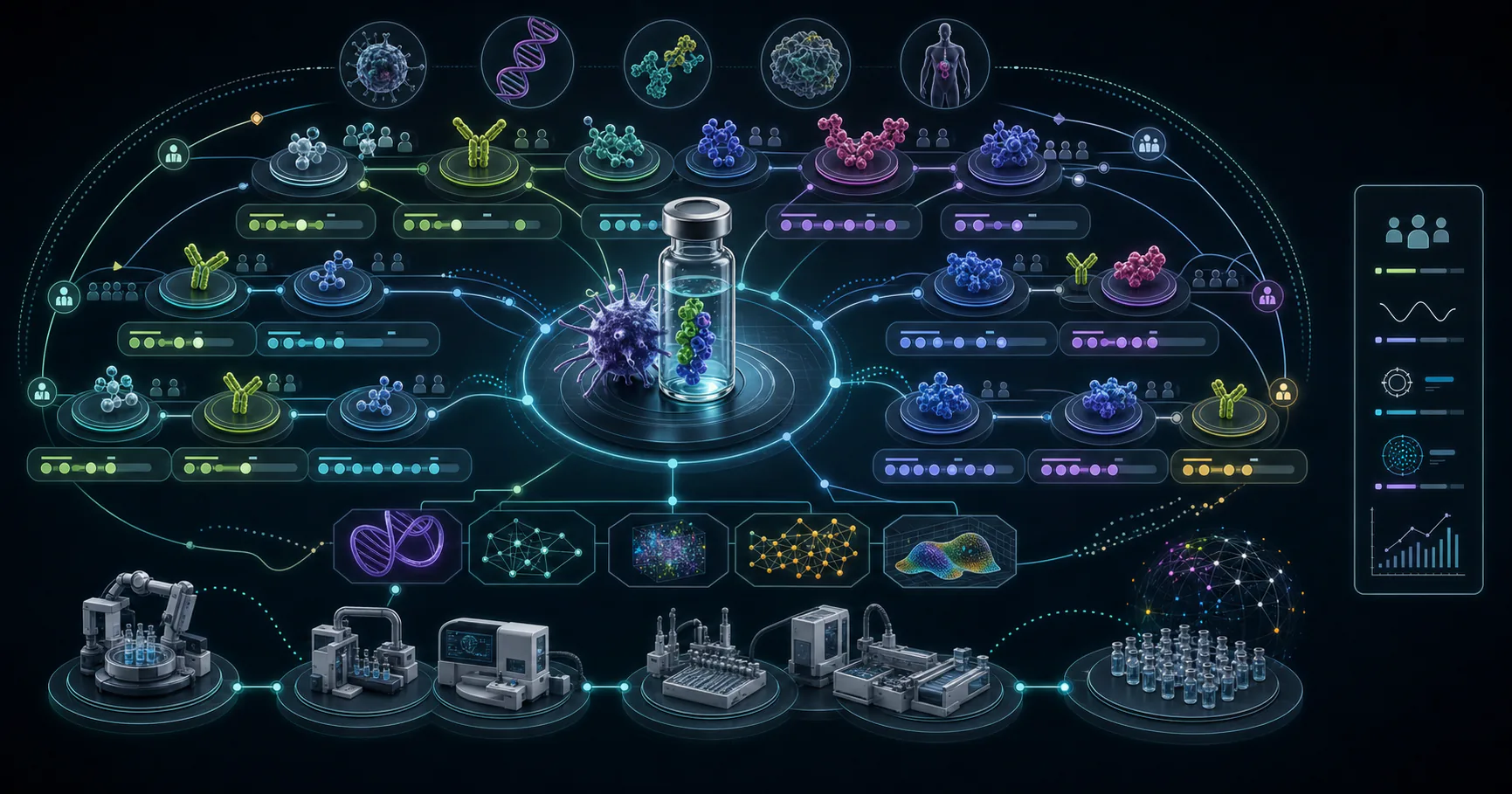
The companies, platforms, and catalysts in neoantigen cancer vaccines as of mid-2026 — personalized mRNA leaders, AI-native mid-caps, and off-the-shelf shared-antigen approaches, with endpoints and risks called straight. · 2026-05-30
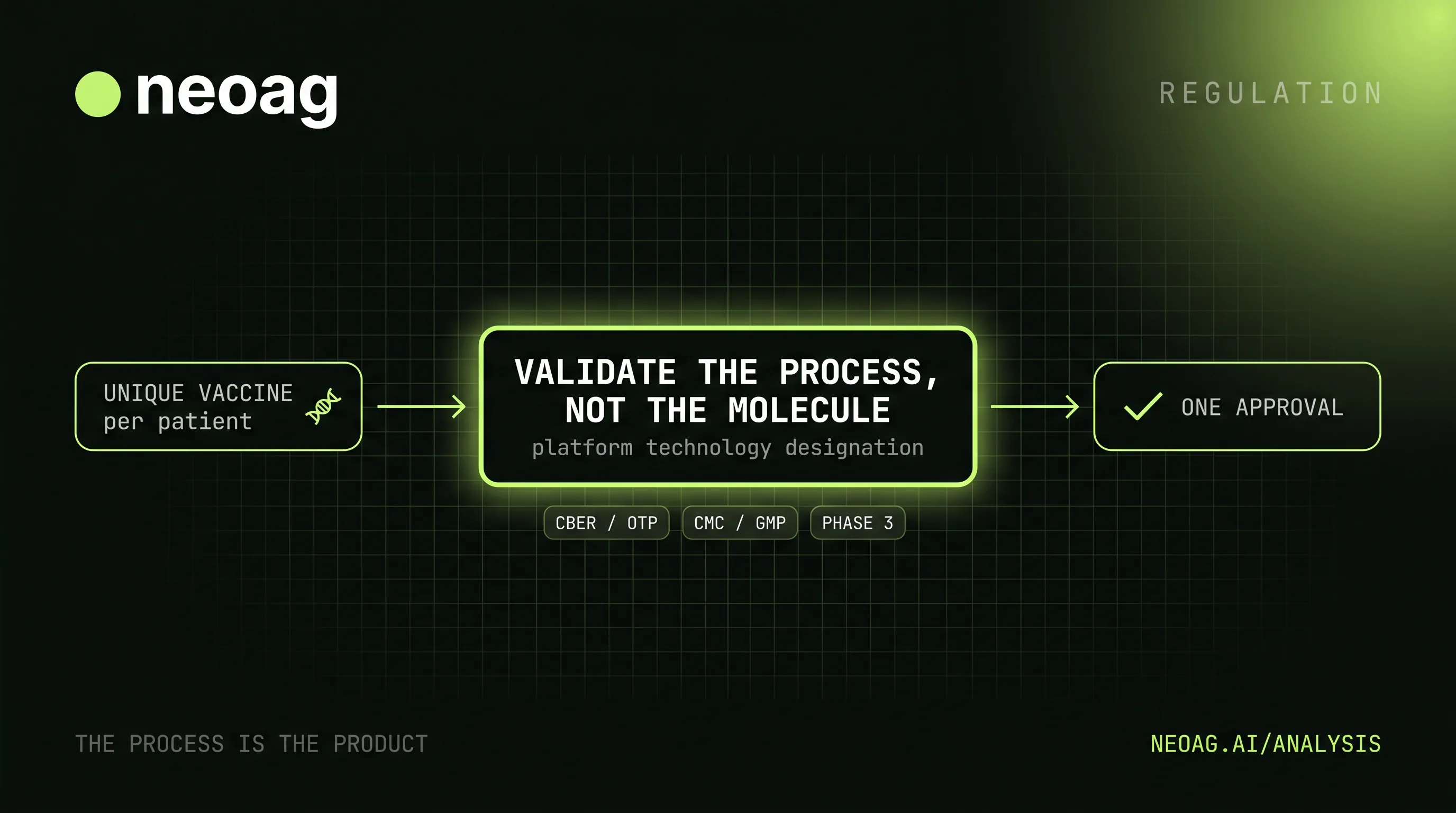
How FDA handles personalized N-of-1 cancer vaccines: process validation, CMC and release specifications, individualized-product precedents, Platform Technology Designation, real program status, and the approval questions a first neoantigen vaccine would settle. · 2026-05-30
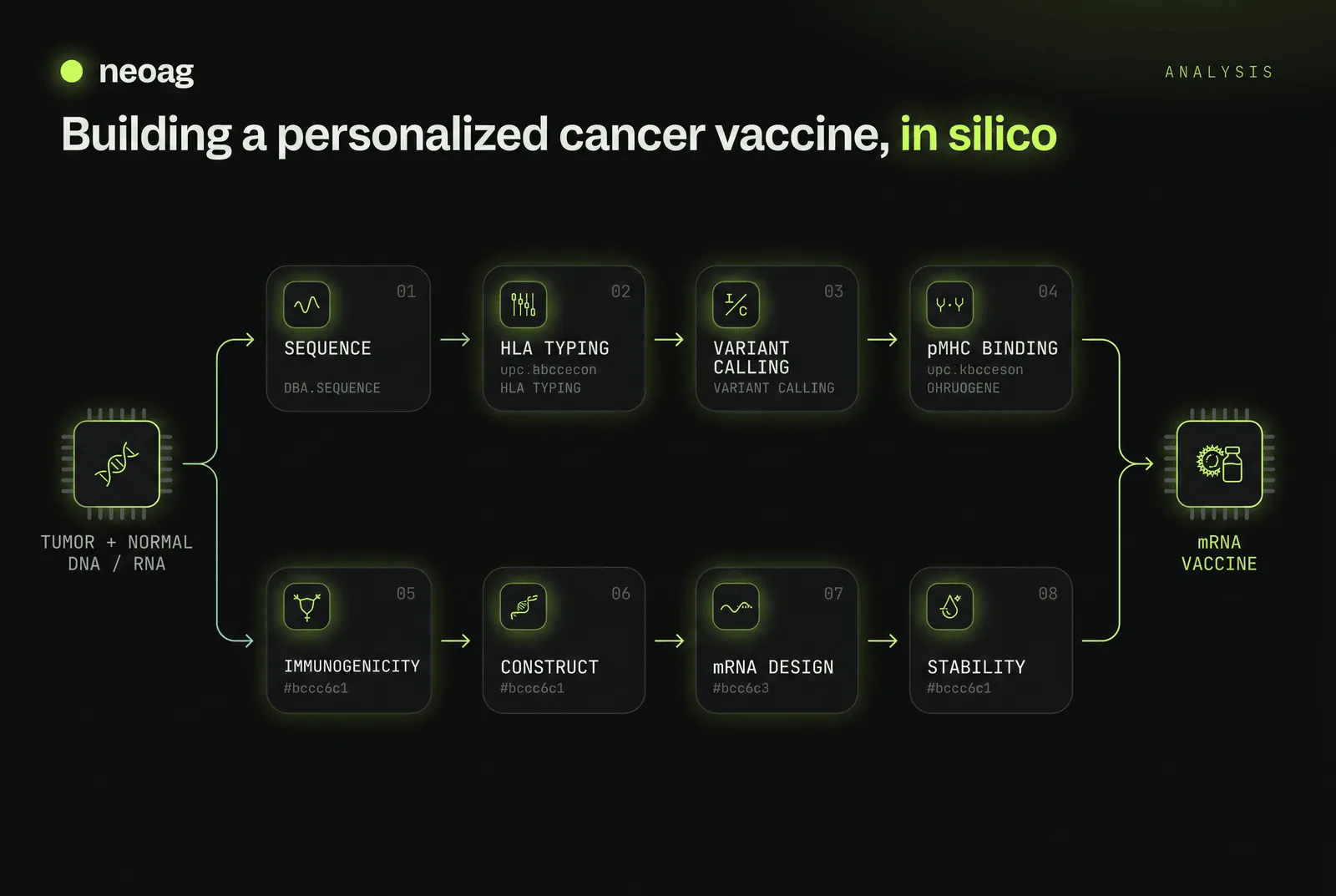
Eight computational phases turn a patient's tumor mutations into a vaccine: HLA typing, variant calling, pMHC binding, immunogenicity, construct assembly, and mRNA optimization. A practical map of the tools — OptiType, pVACtools, ESM-2, LinearDesign — that run each one. · 2026-05-30
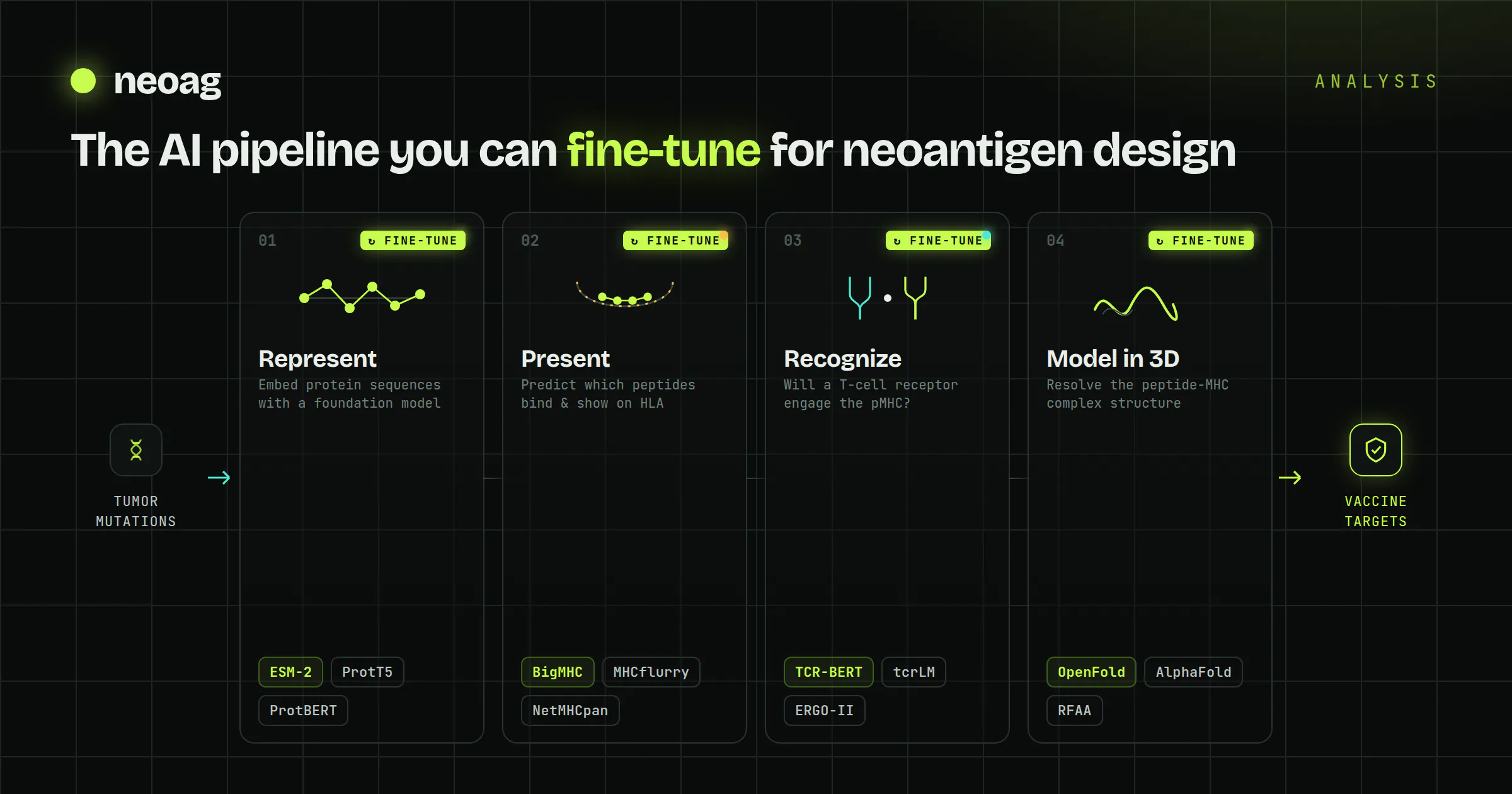
Foundation models have reached neoantigen discovery — but only some can actually be fine-tuned on your own data. A field guide to the ones that can, grouped by the problem they solve. · 2026-05-30
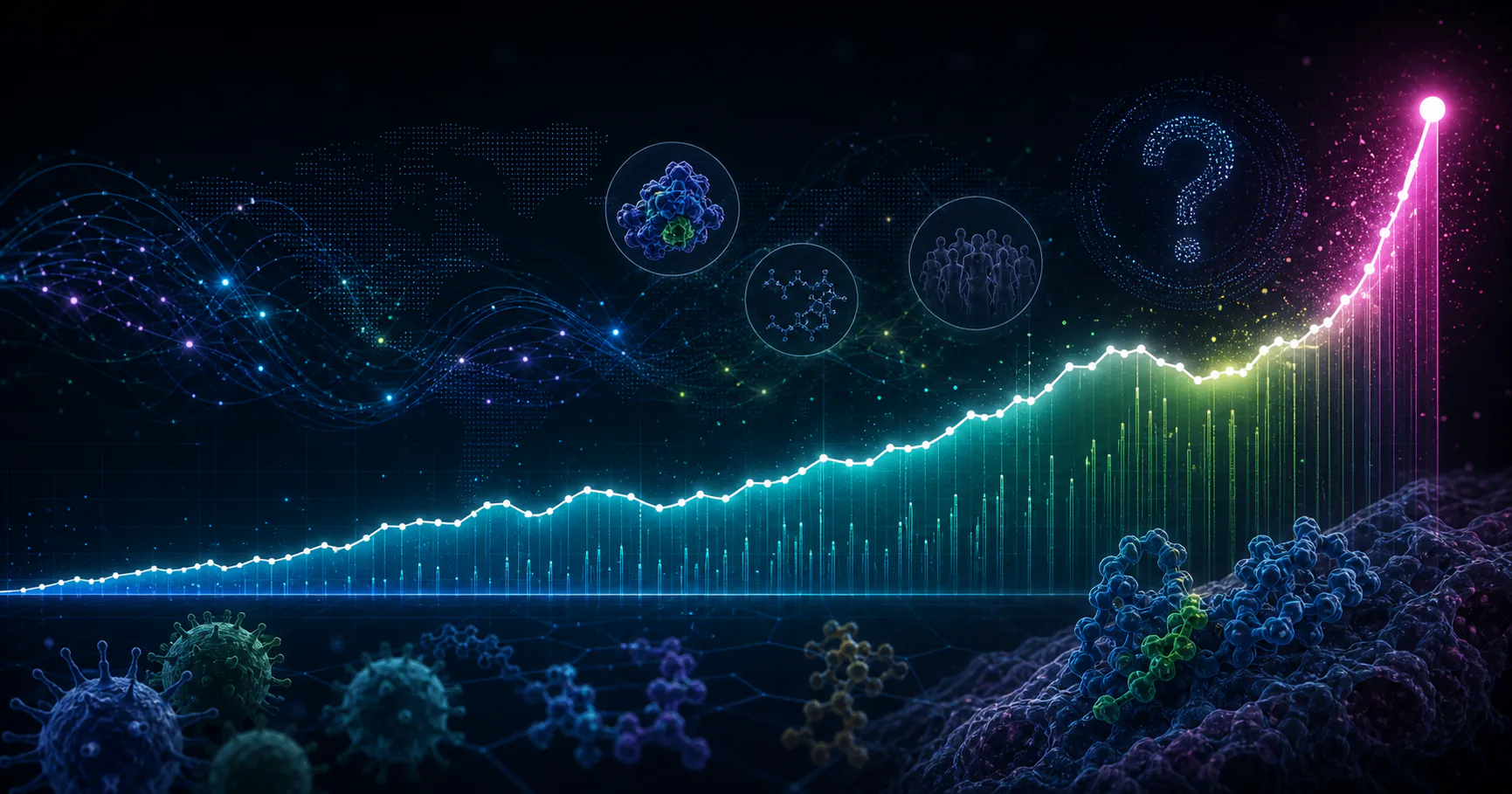
Search interest in “neoantigen” sat near zero for years, then broke out in 2026 to its highest point on record. What the curve means — and its limits. · 2026-05-30