Proteasome / proteasomal cleavage
The cellular machine that shreds proteins into peptides — its cut sites decide which fragments are even available to be presented on MHC class I.
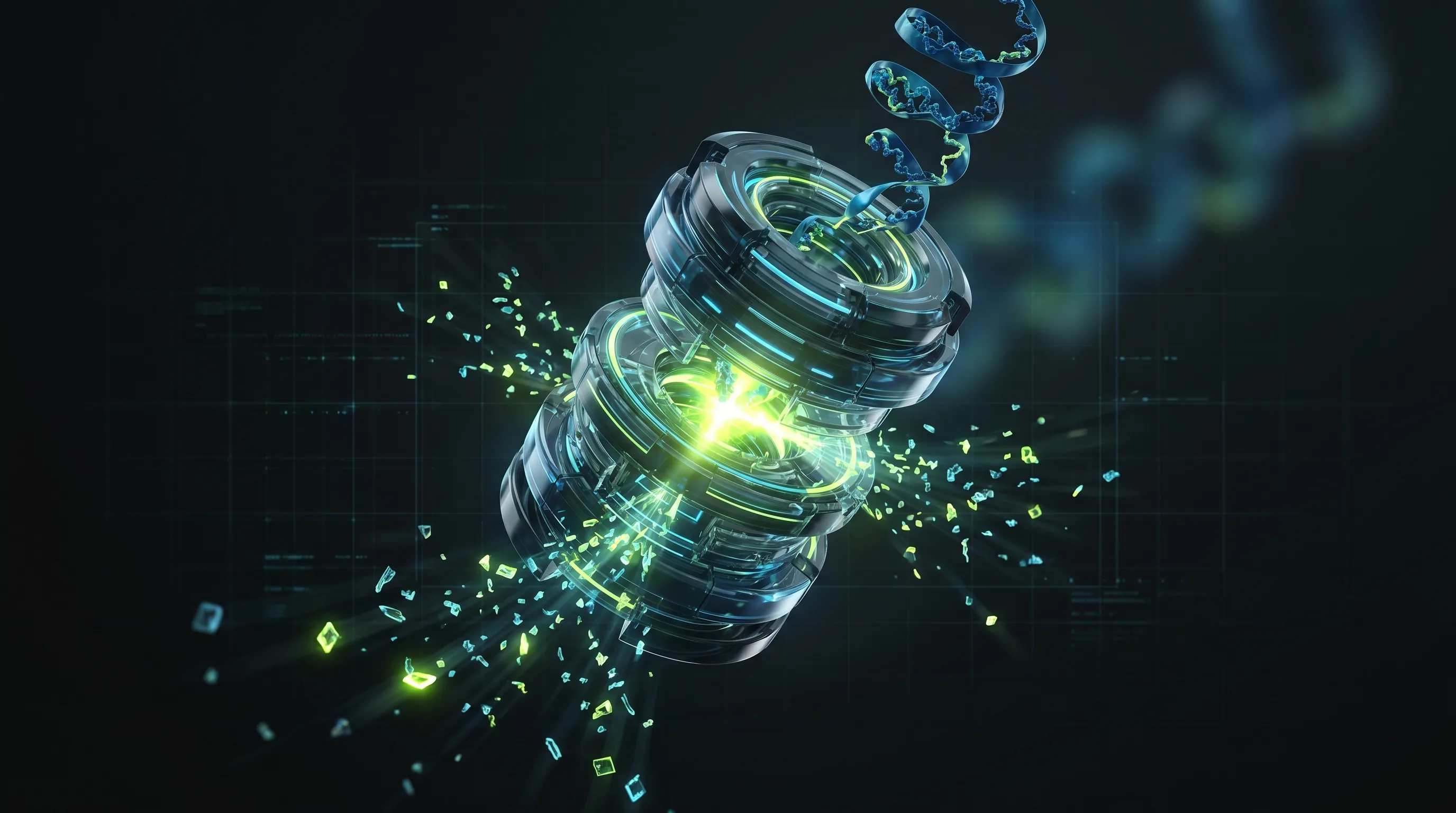
The proteasome is the cell's protein-disposal complex: it chops worn-out and newly made proteins into short peptides. For MHC class I presentation, those peptides are then trimmed and loaded onto HLA. So the proteasome effectively defines the upstream menu — only peptides whose boundaries it actually produces can be presented.
This is why modern epitope prediction tries to model the whole processing pathway, not just final HLA binding: a peptide that binds an allele perfectly is irrelevant if the proteasome never cleaves it out cleanly. Cleavage-site prediction is a distinct, learnable sub-task feeding the larger pipeline.