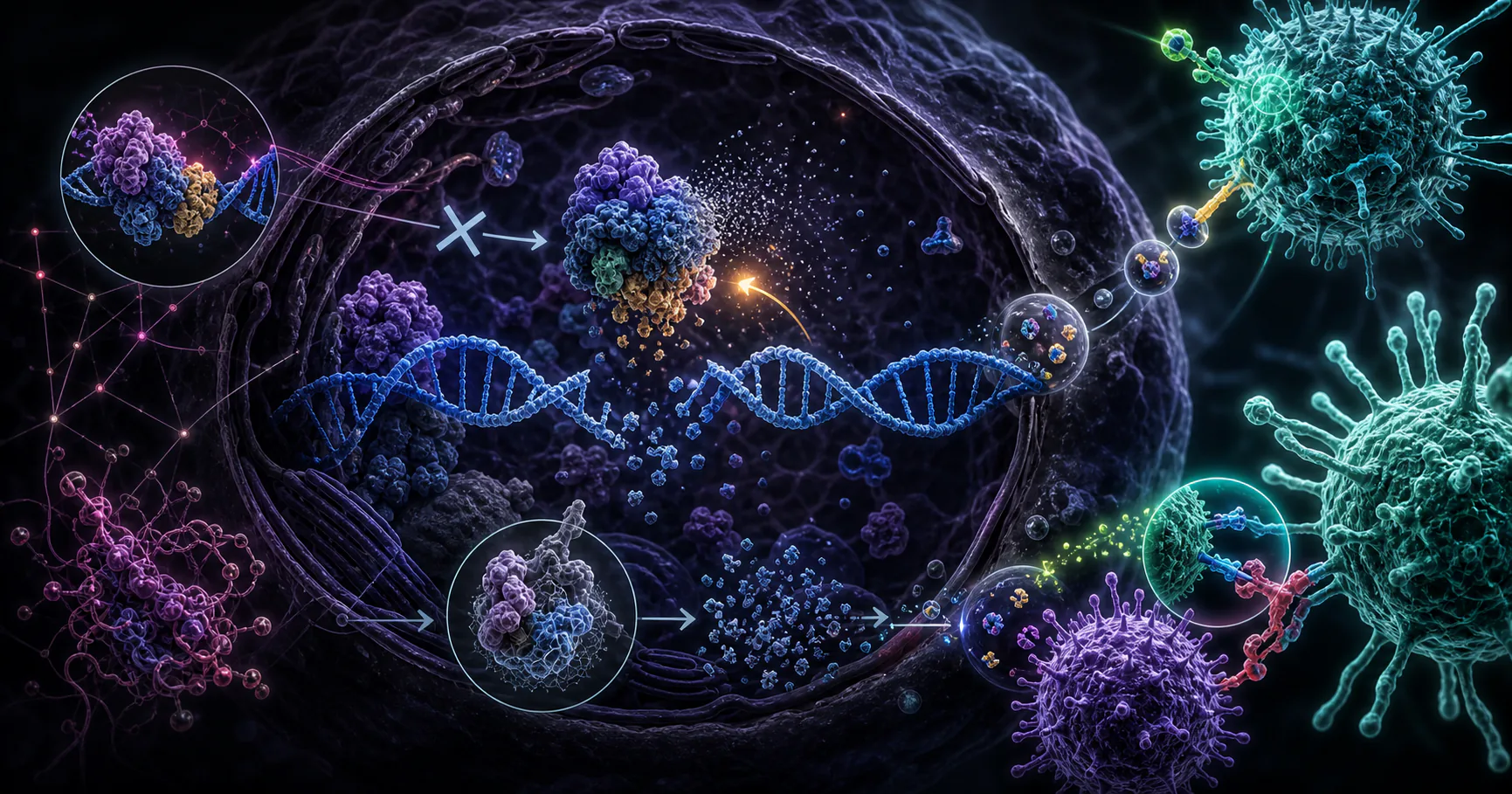
Researchers have identified UNI418, a small molecule capable of degrading RAD51, thereby reversing PARP inhibitor resistance in preclinical models. This mechanism disables tumor DNA repair pathways, restoring sensitivity to therapy and slowing tumor growth in mice and cell lines. While the headline suggests a broad shutdown of cancer’s DNA repair, the scientific reality is more nuanced: UNI418 specifically targets the homologous recombination repair (HRR) pathway, exploiting the synthetic lethality that underpins modern targeted therapies.
Mechanism and Synthetic Lethality
This method contrasts with traditional small-molecule inhibitors that compete for active sites. Instead, UNI418 acts as a proteolysis-targeting chimera (PROTAC)-like agent or similar degrader, offering a potentially more durable blockade of the repair process. The preclinical data indicates that this degradation restores therapeutic sensitivity, suggesting that targeting protein stability rather than enzymatic activity could be a viable strategy for overcoming resistance in cancers with complex mutational landscapes.
Implications for Neoantigen Vaccines
Furthermore, this approach complements our coverage of checkpoint inhibitors and neoantigen vaccines. If UNI418 restores sensitivity to PARP inhibitors, it may also sensitize tumors to immune-mediated killing by increasing the release of tumor-associated antigens. The combination of DNA repair inhibition with neoantigen vaccination could create a potent feedback loop: the vaccine primes T cells, while the degrader ensures the tumor remains antigenically visible and vulnerable to attack. This mirrors the logic seen in recent ASCO 2026 trends where AI-driven prediction tools are used to identify targets that are most likely to be exposed by such stressors.
Challenges and Clinical Translation
Additionally, the complexity of resistance mechanisms means that blocking RAD51 may not be a universal solution. Tumors may develop alternative repair pathways or mutations that bypass the need for RAD51 entirely. This underscores the importance of our ongoing analysis of AI neoantigen prediction tools, which must evolve to account for dynamic changes in tumor biology induced by such therapies. The goal is not just to identify static neoantigens but to predict how the tumor’s antigenic landscape shifts under therapeutic pressure.
What to Watch
Monitor for early-phase clinical trials testing UNI418 or similar RAD51 degraders in combination with PARP inhibitors. Key signals include safety data regarding off-target effects and biomarkers that predict response, such as baseline RAD51 expression levels or homologous recombination deficiency status. Additionally, watch for partnerships between small-molecule developers and neoantigen vaccine companies, as the synergy between DNA repair inhibition and immunotherapy could define the next wave of combination therapies.
Related on neoag
- Who’s building neoantigen cancer vaccines (2026) — Analysis
- Checkpoint inhibitor — Glossary
- ASCO 2026 Abstract Intelligence: Key Trends in Oncology and AI — Analysis
- Personalized vs off-the-shelf neoantigen vaccines — Analysis
- AI neoantigen prediction tools, compared (2026) — Analysis
- Vaccine or T cell? Two ways to drug a neoantigen — Analysis
- Colorectal cancer — Tumor type
- Gastric cancer — Tumor type